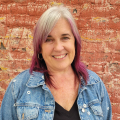
Michael Cooper, like most people, has many sides. There’s Michael Cooper, adventuring outdoorsman who’s racked up more than 8,000 miles trailblazing in the desert and backcountry, summitted countless mountains (including the 10 highest peaks in Oregon), run wild rivers, and been on the brink of death more than once.
There’s also Michael Cooper, music journalist, who’s been published more than 500 times. And then there’s the accomplished recording engineer and producer who’s worked with Academy Award-winning actor William Hurt, ABC World News anchor Barry Serafin and Grammy-winning singer/songwriter Ashley Cleveland.
And just recently, he became Michael Cooper, award-winning author after the October 2025 publication of his first book, “Miscalculated Risks: Attacked, Crippled, Paralyzed, Drowning, Unconscious and Freezing in the Wild (Just Not All at Once),” which recently received the 2025 Literary Global Book Awards’ Narrative Non-Fiction award and was a LGBA finalist in the Autobiography-Memoir and Debut Non-Fiction categories.
The brazenly honest account of his decades spent combing the wilderness, and how it’s affected his life, blends adventure, personal reflection and gripping storytelling as he chronicles brushes with death, extreme wilderness encounters, and the relentless drive that pushed him more than 8,000 miles into some of the most remote and uncharted North American landscapes. He published the book through his own Larrea Press.
Shortly before winning the LGBA award, Cooper received the American Writing Award for Best New (Debut) Non-Fiction. The outdoors-adventure memoir was also an AWA Finalist in the Narrative Non-Fiction category. Additionally, Cooper was selected as an AWA 2026 Featured Author.

The 72-year-old and his wife, his frequent backpacking companion, Janet Huerta, call Sisters home. Shortly after getting married in 1998, the couple moved there from Eugene, where Cooper had built a strong reputation over nearly a decade as a successful recording engineer and producer and music journalist. However, after losing the lease on his Eugene recording studio that he’d kitted out to his exacting specifications, and then struggling to find another space in the Willamette Valley that met his requirements, it was a conversation with Huerta that lead the couple to Central Oregon.
“All of the backpack trips that I had done in Central and Eastern Oregon, I had to travel through Sisters for most of them, from Eugene. Every time I drove through Sisters, the land and the flora and fauna just felt like home to me,” said Cooper by phone from his home, which is just a couple minutes’ walk from the Deschutes National Forest. “I’ve always had a deep appreciation for how the mountains rise thousands of feet in the air so abruptly on the east side. Those mountain views, and then the Juniper and sage and pine trees. Ponderosa Pine are my favorite tree. I love the way the bark smells. It’s like the combination of butterscotch and vanilla. I just love that smell. So, you know, everything about Central Oregon just drew me like a magnet.
“At that point, I had made a name for myself in the music trades, writing for the recording industry, and I realized that I could live anywhere and still do that,” he recalls. “My wife said, ‘Forget about where you think you should live. Where would you like to live?’ I told her I’d always imagined retiring to Sisters and she said, ‘Well, why don’t we live there now?’”
Cooper’s engrossing book also delves into the various physical ailments and injuries he’s experienced, as he writes honestly about the physical toll they took, but even more brutally, the emotional cost. He’s got benign tumors in his brain, discovered years ago, and myriad battle scars, a hinky Achilles tendon and knee, not to mention an arthritic hip. No doubt, all of that was exacerbated from years of carrying a 70-plus-pound pack on hardcore, off-trail desert expeditions, mountain climbs, multi-day backpacks, and gnarly whitewater trips on Oregon’s Owyhee River and the Grand Canyon’s Colorado River, where he was thrashed through rapids after parting ways with his boat. He still hikes daily, has a workout routine he follows religiously, and ensures he takes frequent backpacking trips into the wilds. He also gets regular bodywork treatments and has an upcoming date for a hip injection.
“I’m just trying to preserve as much as I have left of this body so I can still get out there and backpack and be in the wild,” he said.
He also continues to write for Mix magazine, a preeminent publication for the recording industry for whom he’s served as a contributing editor since 1996. Just last summer, he closed his Sisters-based recording studio that he built from scratch after the move from Eugene.
Growing up on Long Island in New York, he was a musician who spent many a night playing New York clubs before the call of California and the west coast grew too strong to ignore. Once there, he fully embraced the hippie movement and discovered a passion for the outdoors and living at one with nature that’s persisted to this day.
Without giving away too many spoilers, he details countless trips that he exactingly planned and then explains how many didn’t necessarily go according to plan. He survived a near-fatal stint in Yelapa, Mexico, where he lived in a rudimentary dwelling 40 minutes from what was then a very tiny sea village and was stung by a scorpion. He vividly describes a near-death experience that impacts him to this day. He writes about another trip in which he and backpacking partner, Ted Greenwald, who he met while both worked for the now-defunct Musician magazine, narrowly averted tragedy after running out of water and having to resort to drinking their own urine in backcountry expedition in Zion National Park. And then there was the inadvertent dump out of a boat on the Owyhee, where he was certain his number was up.
He also explains how he became an expert navigator, cutting his teeth on a month-long trip in 1980 to California’s Sierra Nevada range with Kim Howell, a Canadian adventurer he met while living at Madre Grande Monastery in the Laguna Mountains of California. It was one of four rural communes he briefly lived in.
“We did hundreds, if not thousands, of map and field bearings,” he recalls of that trip, explaining that he and Howell learned what he feels is an absolutely a necessary skill for all wilderness adventurers.

“I’ve occasionally run into a stranger or an acquaintance who has said, ‘Why didn’t you just bring GPS with you,’ which we did for later expeditions because they made finding our water caches a lot easier, but usually, my response has been that you shouldn’t rely on GPS in the wilderness because these things, you can drop them and break them. And they run out of battery juice. If you’re going to put yourself into remote situations, it really behooves you to learn how to navigate without electronic devices,” he said. “Far more important than even having a compass is being able to read a topographic map because if you’re a good map reader, you can always tell where you are, what the surrounding topographic features are, and where you need to go, and therefore, what your direction of travel is between the landmarks you can see. You don’t need a compass to do that. Of course, if you’re in deep forest cover, and you can’t see any landmarks, then it becomes a problem. The trip in chapter Bad Beta for the Siskiyous where I was in deep forest, and there was no trail, I found myself having to climb trees in order to shoot bearings.”
He says that once he finally decided to write a book, it took him five years to finish it, mostly because the exacting standards to which he planned his expeditions carried over to his writing.
“I know what good writing is, and I worked the book until I felt like it was the very best I could write it,” he said, explaining he was slow to complete his first draft for two main reasons. “First, it took a lot of research. Like, the Yelapa chapter, most of what I had to go on, leading up to the scorpion incident, was just photographs, and then I found an old passport that told me when I crossed the border into Mexico.”
He coalesced notes he found on the back of photos, analyzed angles of shadows in pictures to tell their location and time of day, researched sunrise and sunset charts for specific locations, and went through “everything in my house in the process of writing the book to find all kinds of information to fill it in with as much detail as possible so that the reader has the experience of being there and discovering it as it happened to me.”
He didn’t journal much when he first began his outdoor adventures, hence the need for all that research, although he did begin journaling after his near-death scorpion experience in 1978.
“I don’t know why I did it,” he recalls. “I just felt at the time that it was a life-changing experience that at some point in the future would be useful information. Well, four decades later, I guess it was. I found that journal.”
He also gleaned information from the writings of his expedition partners, including Greenwald, who trailblazed with Cooper on many a desert excursion, including the Zion trip where they ran out of water. That episode was extremely embarrassing and upsetting, says Cooper.
“I needed a different perspective from someone besides myself to lend balance to that story,” he said. “That chapter was extremely difficult for me, emotionally, to write because I feel like I look like an idiot, after all of the expeditions we had pulled off successfully, and all the other trips and mountain climbs and everything else that had worked. That one I felt really embarrassed by. I found myself rewriting and rewriting and rewriting that chapter, peeling away layers of obfuscation until I felt like it was truly an honest account of what happened. Frankly, I was embarrassed that we had screwed up so much, so for that one story, it was especially important for me to get Ted’s journal and get his perspective on it.”
Cooper was gracious enough to take a few minutes recently and answer some questions, sharing his perspective on life and adventure, among other things.
the Source: You are a prolific music journalist. What was the difference for you between journalism and sitting down to write a book?
Michael Cooper: Boy, that’s a really good question. The journalism that I’ve done, by and large, is really technical. A lot of it is discussing recording techniques and mixing techniques for music. I’ve done hundreds of hardware and software reviews. A person who is not a recording engineer? None of it would make any sense to them. It’s very technical and jargony, so making the leap from being essentially a technical writer to being a writer of creative nonfiction, that took me, conservatively, a full year. First of all, I had to find my authorial voice. Secondly, I had to get away from the more professorial voice that is called for in technical writing and become more of a storyteller. The first year of writing, I felt like it wasn’t bad, but I didn’t feel like it was great writing. I also didn’t want the writing to be derivative, so I made it a point of not reading any other authors for the entire five-and-a-half years that I wrote the book.
Wow, you didn’t read a book for more than five years. Was that tough?
MC: It wasn’t tough, except for my wife urging me to read other authors in order to see how they wrote. I told her I didn’t want to do that. I felt like it would influence my own writing style too much, and I wanted the book to be fresh. Even before starting the book, I must confess, I had not read many other authors. I’ve been so busy writing hundreds of articles for the music trades that I frankly didn’t have much time to read books. The only person who I had extensively read was Jon Krakauer. His book, “Into Thin Air,” really spoke to me, being a mountaineer myself. I read other books about outdoor adventures after I finished mine, but I deliberately avoided reading anything else (while writing my book) because I didn’t want it to influence my own style.
tS: After reading your book, it’s obvious there were so many highs and lows during your numerous expeditions. What would you pinpoint as your biggest high or your most exhilarating moment?
MC: That would have to be the near-death experience after the scorpion (sting) because not only was it the most blissful experience I’ve ever had in my life, it was almost the most consequential as to how I led my life going forward after that. It really brought my mortality into stark relief. I realized after that experience that it could all end. Any day or any moment, I mean. You don’t have to be out in the wilderness for that to happen. You can be driving your car, and someone swerves into your lane, and then it’s all over. When that incident happened, I was in my early 20s. You know, when we’re in our early 20s, we think we’re invincible. And so that incident was a real wake-up call for me in that regard. And it also impelled me to look at life through the lens of what do I want to do in my life and that I should do it now.
tS: Do you feel like that near-death experience took away your overall sense of fear, enabling you to do tackle some of the intimidating adventures you undertook?
MC: No, but it definitely took away my fear of dying. I’m not afraid at all of death. I don’t want to suffer pain in the process and, you know, I’m having a great time in this life, and I don’t want to hasten my demise, but I don’t have any fear of dying since that experience. But it didn’t make me fearless in the wild. All the times that my life was at risk, I was scared. But I think as far as undertaking some of the more ambitious expeditions, it tempered my fear leading up to those. And it (similar to) what my mountaineering buddy, Ed Lovegren, had told me before we climbed Mount Jefferson. He said, and you may recall this from the book, ‘Ignore the horrors.’ It helped me put it out of my mind, like when I was trying to get to sleep the night before I knew I would fly to meet Ted Greenwald (a frequent trekking partner) somewhere and go off on a crazy expedition. I would just hear Ed’s voice in my mind saying, ‘Ignore the horrors. They don’t portend disaster.’ And his counsel made me a more confident adventurer. But still, when things went sideways, it was scary.
tS: What was your scariest moment?
MC: That’s hard to say because there were so many. Certainly, when we (he and Ted) ran out of water in the desert and had to drink our urine to survive, that was really frightening, especially because I’d had really bad heat exhaustion half a dozen times before that, and I knew what was coming. Before that, there was one time that was a really close call where my wife, Janet, had nursed me through the night in the wilderness. We had backpacked up to a high basin in the Three Sisters wilderness, and I had really bad heat exhaustion. I was right on the edge of heat stroke, and so being in that situation several years later, in the desert with no shade, no water, no electrolytes, and 1,100 feet down in a steep canyon, that was pretty petrifying, especially as my symptoms escalated. I really wasn’t sure whether I was going to get out of there alive or not.
tS: You described how you walked barefoot everywhere in Mexico, prior to the scorpion sting, and you said you felt like an angel was watching over you. Do you feel like you’ve had that experience your whole life?
MC: I would have to answer yes. Otherwise, how did I possibly survive all of those situations? I wouldn’t say that I’m religious in the traditional sense. Like, I don’t think there’s an angel flying around with wings protecting me, but I’m deeply spiritual. How can you not be if you’ve spent so much time out in the beautiful wilderness. I do feel like there must be some higher power or a spirit guide or something inscrutable that’s been looking over me because I’ve had so many close calls and yet, here I am. I’m still above ground.
tS: In the chapter about the Owyhee River, you said you popped like a cork out of a champagne bottle when you got thrown out of the boat on the Montgomery Rapid and went headfirst over a waterfall. It was terrifying to read. You wrote, “two down and seven to go,” referring to using up your nine lives, like a cat.
MC: Yeah, I might have to revisit my statement about the scariest moment for me being when we ran out of water in the desert and had to drink our urine to survive. When I fell out of that boat, I thought I would be dead seconds later, going over the waterfall headfirst. That was a really shocking moment, especially because it happened so quickly. One moment, I was in the boat, and literally, within a second later, I was in the water. It was really shocking and terrifying.
Did you really think that might be the end? Did your instinct for survival kick in?
tS: I knew exactly what was going on the moment I went into the water. I was, like, ‘Oh shit, this is not good. There was really nothing I could do. I made the initial mistake of trying to swim to catch up with the boat, which was ridiculous. There’s no way that you can swim to a boat in rapids. The river is going to take you wherever it wants to. Once I realized that wasn’t going to work, I thought, ‘OK. This is probably the end,’ as I went over the waterfall, knowing there was what appeared to be a large rock at the bottom of it. I don’t know how I missed that rock. And then at the bottom of that waterfall was a whirlpool that sucked me under, so really, the only instinct was just to try and grab a lung-full of air whenever I popped up.
tS: So what truly was your scariest moment?
MC: I think I initially said running out of water in the desert, and having to drink my urine to survive, was the scariest moment, and then I amended that to say falling overboard in Montgomery Rapid on the Owyhee River in winter was more frightening. But those close calls paled in comparison to the scorpion sting in Yelapa. That incident was by far the most terrifying, mostly because I knew the sting would likely be lethal without quick medical help and the nearest medical facility was 20 miles away through roadless jungle. But also, the neurotoxic symptoms brought on by the scorpion’s venom were also excruciatingly painful and horrifyingly bizarre. If I had to choose the one survival test in which I was certain I was going to die, that would be it.
tS: You battled a lot of terrifying situations and then had physical issues and injuries over the years, but even still, you seem to just continually keep pushing forward and have been very disciplined with your exercise, physical therapy, and training, and making sure you got back out into the wilderness. What do you attribute that to?
MC: After I got out of my teenage years, I was always very disciplined. But it’s not in a way that I think most people would call being disciplined. It’s not like I feel driven toward perfection or have some responsibility to be as perfect as I can be. I think it’s part of my Virgo personality. Because I’m a Virgo, I’ve just always felt like anything that’s worth doing is worth doing really well. There are rewards that I want to grab, and the only way to get to them, to get those rewards, is to be really disciplined. Also, I think it would have been foolhardy of me to not train really hard before the expeditions I did because they would have ended really badly for me had I not. There’s a quote in the Free Solo movie about Alex Honnold, a professional climber. I’m walking downstairs now to read it, because I actually have it on a Post-It Note on my kitchen counter, and I look at it every day. It says, and I’m quoting word for word, ‘You face your fear because your goal demands it.’ I think if I could paraphrase, you’re disciplined because your goals demand it.
tS: You grew up on Long Island and then eventually made your way to California and the west coast. Reading the book, it feels like a lot of things rather serendipitously worked out for you to lead you to the Pacific Northwest. Are you ever surprised that you’re living in Central Oregon and have had all these amazing adventures?
MC: Looking back. I wouldn’t say I’m surprised, but I am amazed. I really did not like living in New York. I never felt comfortable in my skin. But, you know, life unfolds gradually, and you become a different person with each transition. If my entire transition from New York nightclub musician to a leader of desert expeditions had happened overnight, I would have been shocked. But that took decades to unfold and so it wasn’t surprising. It was more a matter of discovering myself and what my soul needed to feel nourished.
tS: You write in your book about how you saw a backpacker in the Sierra, near the Roaring River’s headwaters, way off in the distance, dropping down a mountainside from boulder to boulder, obviously traveling off trail, and navigating himself. That seemed to be where the idea sparked for you to learn to navigate manually. Was that a watershed moment for you?
MC: Absolutely. I was like a light switch. There was before I saw him and then after I saw him. From that moment on, I looked at doing outdoor adventures totally differently.
tS: Did you ever find out who he was or meet him?
MC: No. He was thousands of feet above me, so I never did get to see him and talk with him. But I didn’t have to, you know? As soon as I looked at the map and realized where he was coming down from, it occurred to me that he had navigated to some lakes out of sight and far off trail on the other side of the river. For me, it was, like, ‘Wow. I’ve got to do that now!’
tS: You’ve had so many adventures, both scary and exhilarating. What would be your advice to people who might seek adventures of their own?
MC: First of all, I have to preface it by saying I’m not usually someone to give advice to people because I feel like everyone has to lead their own life. I don’t want to come across as arrogant and thinking that I have counsel for somebody about how they should lead their life. But I would say, if pressed, that I would advise people to think about what they most want to do in life and don’t delay. Go after that! I mean, it’s kind of a cliché to say, ‘Live your bliss,’ but I think it’s a saying that speaks to me. For example, I’ve always placed my outdoor adventures as a greater priority than work. As much as I love the work that I’ve done and how I’ve really enjoyed being part of the recording industry, being out in the wilderness has always been a greater priority for me. I would schedule my work around my wilderness expeditions instead of vice versa. So, I would just say, ‘What makes your life richer and more rewarding?’ Go after that and go after it now!
Cooper’s book is available online and also in Bend at Mountain Supply, REI, and at Roundabout Books (900 Northwest Mount Washington Drive #110), where he’ll do a presentation on his desert expeditions and sign books on Feb. 5 from 6:30 to 8 p.m. In Sisters, his book is available at Paulina Springs Books, where it’s sold out five times, and at Hike-N-Peaks. It’s also available through the Deschutes Public Library and can be ordered from Barnes & Noble and Dudley’s Books.
Michael Cooper book signing/presentation
Thu Feb 5 6:30-8pm
Roundabout Books & Cafe
900 NW Mount Washington Dr. #110, Bend
roundaboutbookshop.com/event/2026-02-05/miscalculated-risks-michael-cooper
$5
This article appears in the Source January 29, 2026.
MAKE LOCAL JOURNALISM HAPPEN