


Charlene Brown, originally from Hawaii, began looking for a day care center in Prineville for her two-year-old daughter last year. During her search, she had trouble finding a quality child care center that she felt comfortable taking her daughter to.
She had always thought of opening up her own child care facility. “It’s something that I put on the back burner,” she said. When looking for homes with her husband and their four kids, they decided it was finally time. She could stay at home to watch her child, while also following her passion – caring for others.
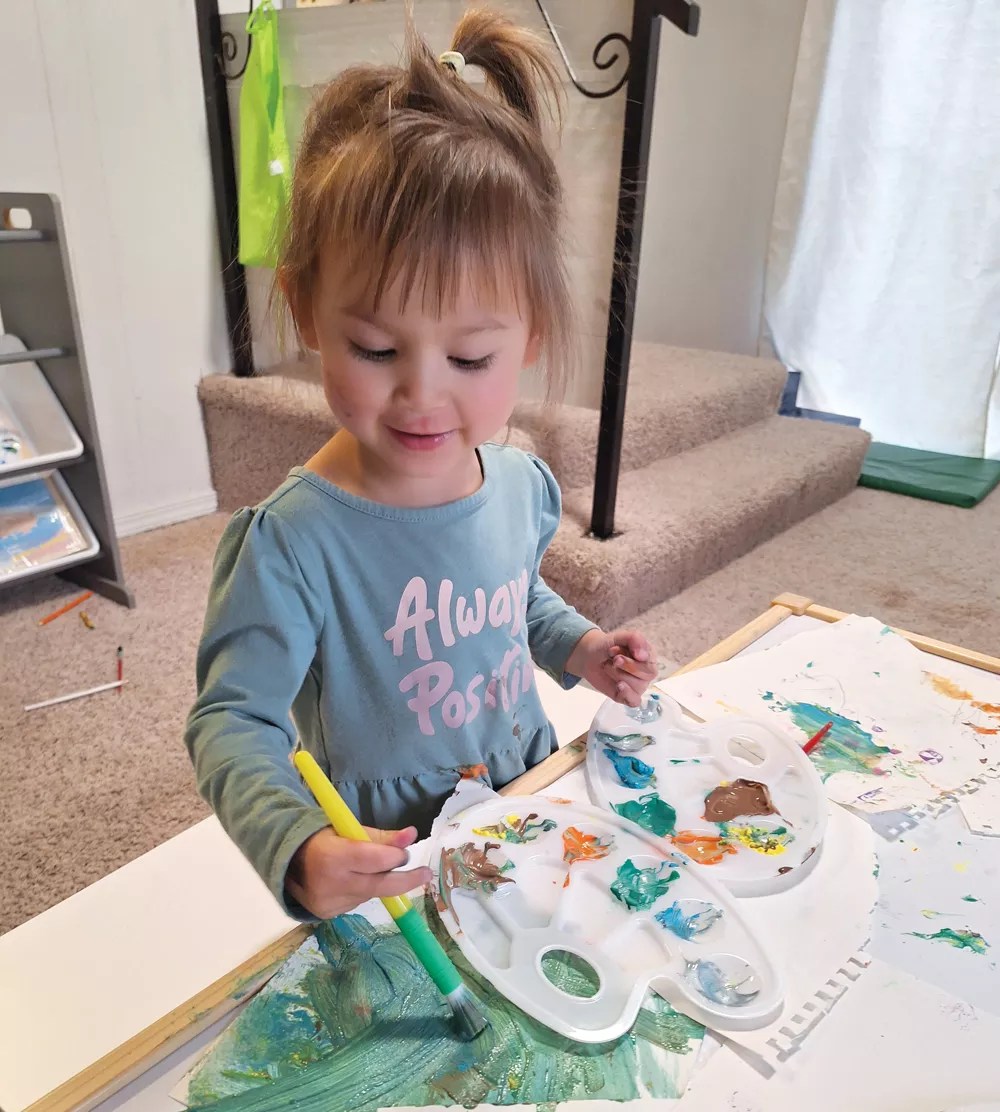
“Family is really big to us in Hawaii. We will take care of our family members, their children, everybody. I’m very fortunate in my child care, that’s the community I’m creating here,” said Brown. Brown was able to open her in-home child care business, Aloha Child Care and Learning Center, in September with the help of a local child care expansion program.
Child Care Expansion Program
Local nonprofit, NeighborImpact, launched a new program over a year ago that received $8.2 million in grant money from Oregon House Bill 5202, appropriating money from Oregon’s general fund to specified state agencies. The goal of the program is to create 1,400 new child care slots in Central Oregon. According to Hannah Kuehl, the grant manager for the child care expansion project, the program has created 777 slots since its inception.
“New providers or persons who want to get into the industry, we’re helping start up. Providers who are already established, we’re helping to expand,” said Kuehl. “What that looks like is both financial support, in the form of these sub grants, and educational components.”
The educational program offers a free three-month course, which then leads to help with meeting requirements and getting a $5,000 grant. “They made everything very simple,” said Brown. They made a checklist of everything that we had to do to become a registered family provider or a certified family provider, and that helped to keep us on track.”
The education involved in this project teaches people how to run their business and how to provide quality care for a child. “It’s not just caring for children, it’s helping to develop them. They are building curriculum, they’re building models, so there’s a lot that goes into these programs besides finance,” said Kuehl.
Child Care Availability in Central Oregon
The Child Care Expansion Project was specifically built to create slots, addressing a significant barrier for many people. According to Kuehl, there’s not enough care in Oregon, so it’s hard for people to have access.
While the program has done a good job at creating preschool slots, said Kuehl, it’s now targeting infant and toddler spots. “That’s really still where the crisis is because it’s so much more expensive to operate infant and toddler slots.”
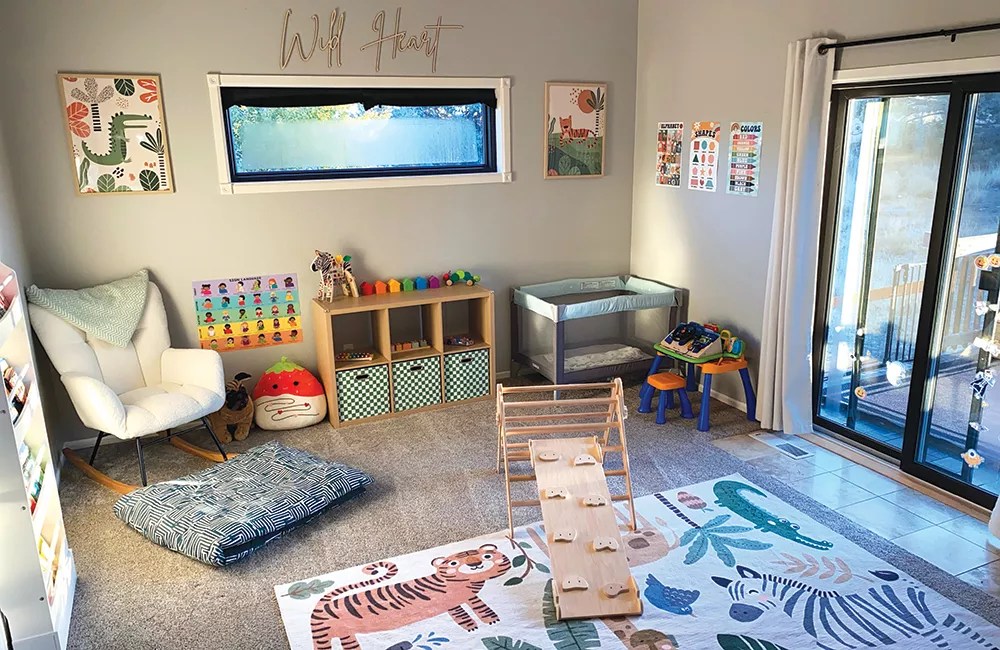
Haley Spencer, the owner of Wild Heart Child Care, was a nanny for over a year after she graduated from college. Once she moved to Bend, she realized the need for child care was here. Spencer operates one of the few centers in Bend that accepts infants. “I would say that infants are my specialty, I’ve always felt like it’s my calling,” said Spencer.
Before Spencer opened her in-home child care center, she reached out to NeighborImpact and was referred to the education program. “I signed myself up as soon as possible,” said Spencer. “I don’t know that I would have been able to do it without it.”
A major barrier, for both families looking for child care and providers wanting to open a business, is affordability. A key piece of this program is creating sustainable slots.
Spencer urges others to do the same. “There are so many people out there who still can’t find child care. I filled up so quickly and I still have a waitlist that is crazy long. I think it’s important that if you are passionate about children and you are able, then this is a great field to be in because you can help so many families,” said Spencer.
While Spencer knew she wanted to do this, it wasn’t easy. According to Spencer, finding a suitable, affordable home in Bend, and finding people willing to work at her facility, was extremely challenging.
One of the biggest hurdles, according to Kuehl, is the challenge of finding buildings or housing.
Real Estate Affordability
A major barrier, for both families looking for child care and providers wanting to open a business, is affordability. A key piece of this program is creating sustainable slots. “A lot of child care businesses go out of business within the first few years because it’s extremely expensive to operate,” said Kuehl.
“It’s not cheap to have a home day care,” said Brown, the owner of the Prineville child care center, who pays for the children’s meals, toys and books. “That grant helped me tremendously.”
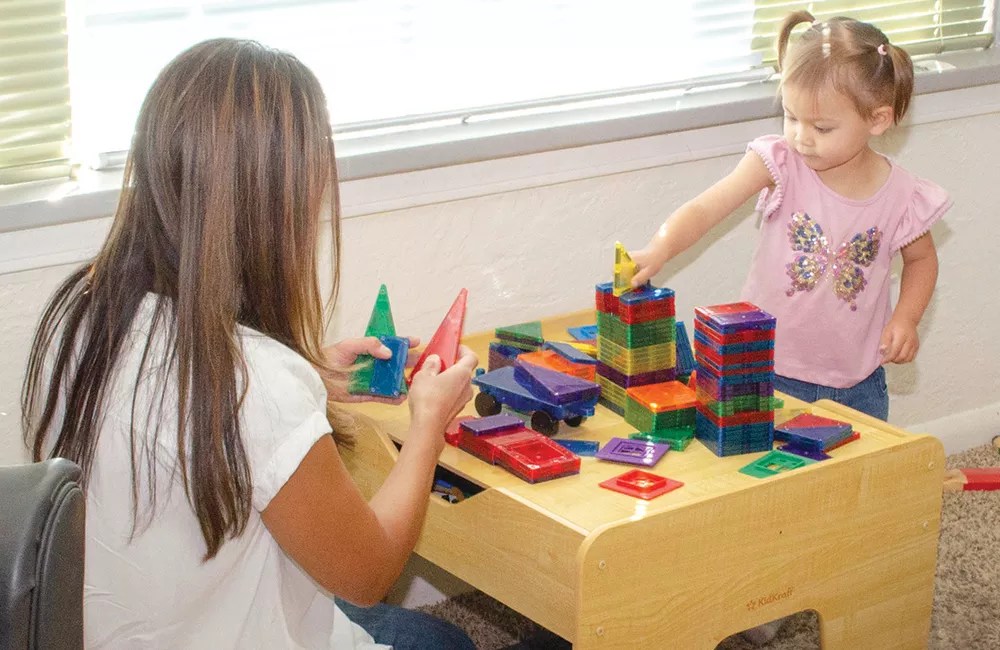
One way some providers have started cutting costs is opening up child care centers out of their homes. While providers can’t take as many children when operating out of a home, the costs go down, since people aren’t forced to pay a separate mortgage.
“As a society, as communities, we need to think about how we can make early learning and child care a better situation for people.”
On a systemic level, the biggest barrier for parents is the high cost of child care, said Kuehl. One local child care center works to lower prices significantly for parents through operating with a co-op model. With this model, ReVillage hosts both paid licensed facilitators and parent caregivers, who volunteer and “give” child care two times a month to receive child care for a lower cost. “The testimonials of our parents are, they could not afford child care before finding our program,” said Becca Ellis, the co-founder of the facility.
The co-op operates out of the First Presbyterian Church, which partnered with ReVillage and provides space rent free. Parents work eight hours a month in the classroom as part of the program and part of their commitment, which helps keep operating costs down.
“There just aren’t enough spots to go around and the ones that exist are way too expensive,” said Ellis. “There is really no infant care for two and under, it’s almost impossible to find. I would love to see a wider conversation in collaboration with business owners to help really support and create those slots for kids,” said Ellis.
Community Support for Child Care
According to Kuehl, community members do see this major issue, prompting some to step up and help. “Community members have really supported the project. We’ve been shocked at how many community members have actually come forward and said, ‘Hey, I know this is a problem. I want to lease my space to help support this issue.’ So we’ve connected a lot of the persons who have gone through these programs with spaces that community members have said they’re willing to lease to child care providers, so that’s been huge,” said Kuehl.
One way to support the industry, according to Katherine Pears with the Oregon Social Learning Center, is to continue to support child care providers. “Child care is not a very well paid, benefited or even valued and respected position a lot of the time,” said Pears. A provider survey from the Early Learning Division found that more providers are leaving the field.
“As a society, as communities, we need to think about how we can make early learning and child care a better situation for people,” said Pears. “Create new, but don’t lose what we have. I think that’s really important.”
“The child care desert issue is nationwide, statewide and county wide,” said Kuehl. Kuehl believes programs like the child care expansion project will need to be more long-term initiatives, rather than just close-ended projects. “We’re hoping to create 1,400 slots, but I think the infrastructure development will need to be a continuous thing,” she said.
This article appears in Source Weekly February 1, 2024.
MAKE LOCAL JOURNALISM HAPPEN


