Stacks of boxes two and three high neatly placed atop well-weathered pallets occupy a section of land between the fence line and a hoop house at Fibonacci Farms. These Russian honeybees arrived back in Bend, their home base from June through January, after an annual trek to California for almond pollination in February and a short spring stay in Eugene at Groundworks Organics. They’re ready for another season pollinating agriculture across Central Oregon and gifting us with their oh so sweet honey.

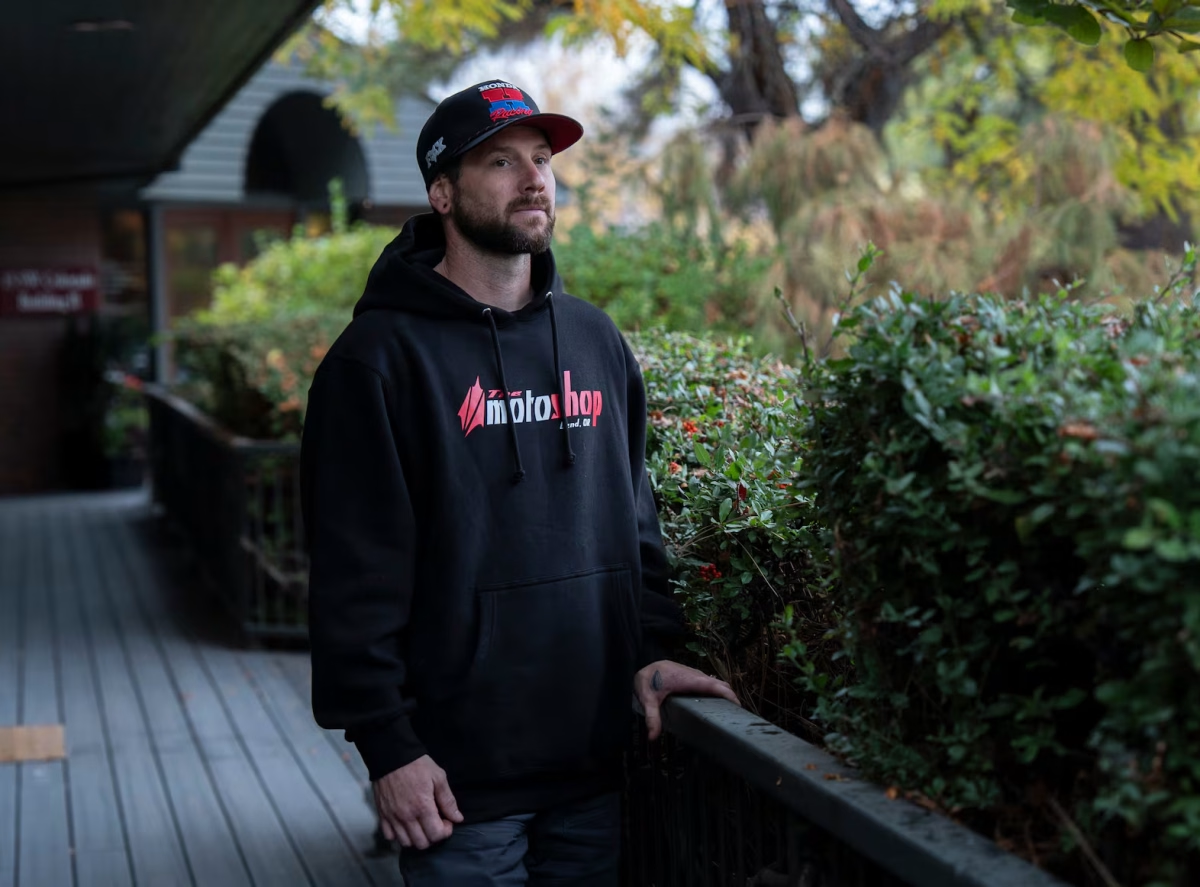
“Being able to pull certain kinds of flavors of honey is super fascinating to me, and what attracted me to the honey side of the beekeeping business,” said local honeybee expert, James “Jimmy” Broadus Wilkie V, master beekeeper and owner of Broadus Bees.
Hive inspections, first calming the bees with smoke, are most successful with a specific intention, which according to Broadus is usually only to find evidence of a queen. Akin to rearranging furniture in someone’s home, pulling out each frame within the bee box is a disturbance best kept to a minimum.
According to the U.S. Department of Agriculture, “about 80% of all flowering plants and over three-quarters of the staple crop plants that feed humankind rely on animal pollinators.”
So, what are beekeepers looking for? Eggs laid by the queen and larvae who’ve hatched from their eggs; the first two stages of metamorphosis before they emerge from their cells as adult bees. A process lasting 21 and 24 days for workers (females) and drones (males) respectively, only 16 for queens who then battle to the death for the role: survival of the fittest queen.
When not selling raw honeys and more at local farmer’s markets, Broadus, among his other bee duties, can be found educating young students about hive hierarchy with a portable observation hive and hosting beekeeping seminars, teaching tidbits like honeybee social structures. He also tends six groups of bees at local farms including Bend’s Boundless Farmstead and Sungrounded Farm in Terrebonne.
“When it’s prime growing season, that’s sometimes when the bees need the most attention,” Broadus explains, his hive health services making a world of difference for both bee and farmer. “Sungrounded Farm just pulled their first honey crop after having bees for three years.”

Vital food sources for their own sustenance, older worker bees consume honey, while larvae and young worker bees consume fermented pollen (aka bee bread), which is why Broadus only takes about 50% of their byproducts to sell.
Having studied wildlife biology in college, Broadus emphasizes the importance of local farming and knowing who grows our food. On top of fake and mislabeled commercially produced honey, Broadus said, “A lot of the honey at the grocery stores are not from the area whatsoever. Local honey is good for local allergies, a product of the environment that you’re ingesting,” adding, “Stuff at the grocery store, you’re supporting the monocultures. I just feel like you should support the local food economy.”
Responsible for one in every three bites we eat, pollinators are crucial. According to the U.S. Department of Agriculture, “about 80% of all flowering plants and over three-quarters of the staple crop plants that feed humankind rely on animal pollinators.”
The biggest threats to these humming honey makers? Pesticides (and some fungicides and herbicides), varoa mites and monoculture — growing the same crop in the same place every season. These harm not only bees, but pollinators alike.
Bees get lots of air time when it comes to pollination, but over 100,000 invertebrate species pollinate plants, from beetles to flies and moths, and more than 1,000 animals pollinate plants worldwide, too.
An essential step in plant reproduction necessary to grow food, pollination also plays a huge part in maintaining healthy ecosystems. Planting pollinator gardens with native plants and natural landscaping will attract — and protect — native pollinators, enhancing sustainable biodiversity. Local nurseries offer specific pollinator sections, taking the guesswork out of gardening.
“Bend has so much habitat loss due to urban growth and conversion of native areas to farmland and new subdivisions. I feel it is important to regain some of that lost habitat by growing native plants and trees in my yard for the local native pollinators,” Barb Rumer, president of Bend Pollinator Pathway, told the Source Weekly.
Diving into night pollinators, Rumer will be the headline speaker at Central Oregon’s upcoming Wildflower Show and Pollinator Festival on Saturday, June 22, held during annual Pollinator Week running June 17-23.
This article appears in Source Weekly June 13, 2024.
MAKE LOCAL JOURNALISM HAPPEN