

An Accessory Dwelling Unit using pre-approved plans from the City of Bend, the first of its kind, was just completed last week, demonstrating the benefits of a program aimed at simplifying the building process for homeowners.
A City of Bend pilot effort, created in April 2023, offers homeowners interested in building an ADU on their lot a pre-approved design plan, saving them both time and money. As of today, the plan includes one option with two different roofing styles, standing at 567 square feet.
The newly completed ADU on the east side of Bend, which used the free, pre-approved design plans, cost the homeowner about $200,000. Construction took roughly four and a half months. This is the first and only application thus far for the pre-approved ADU, according to city officials.
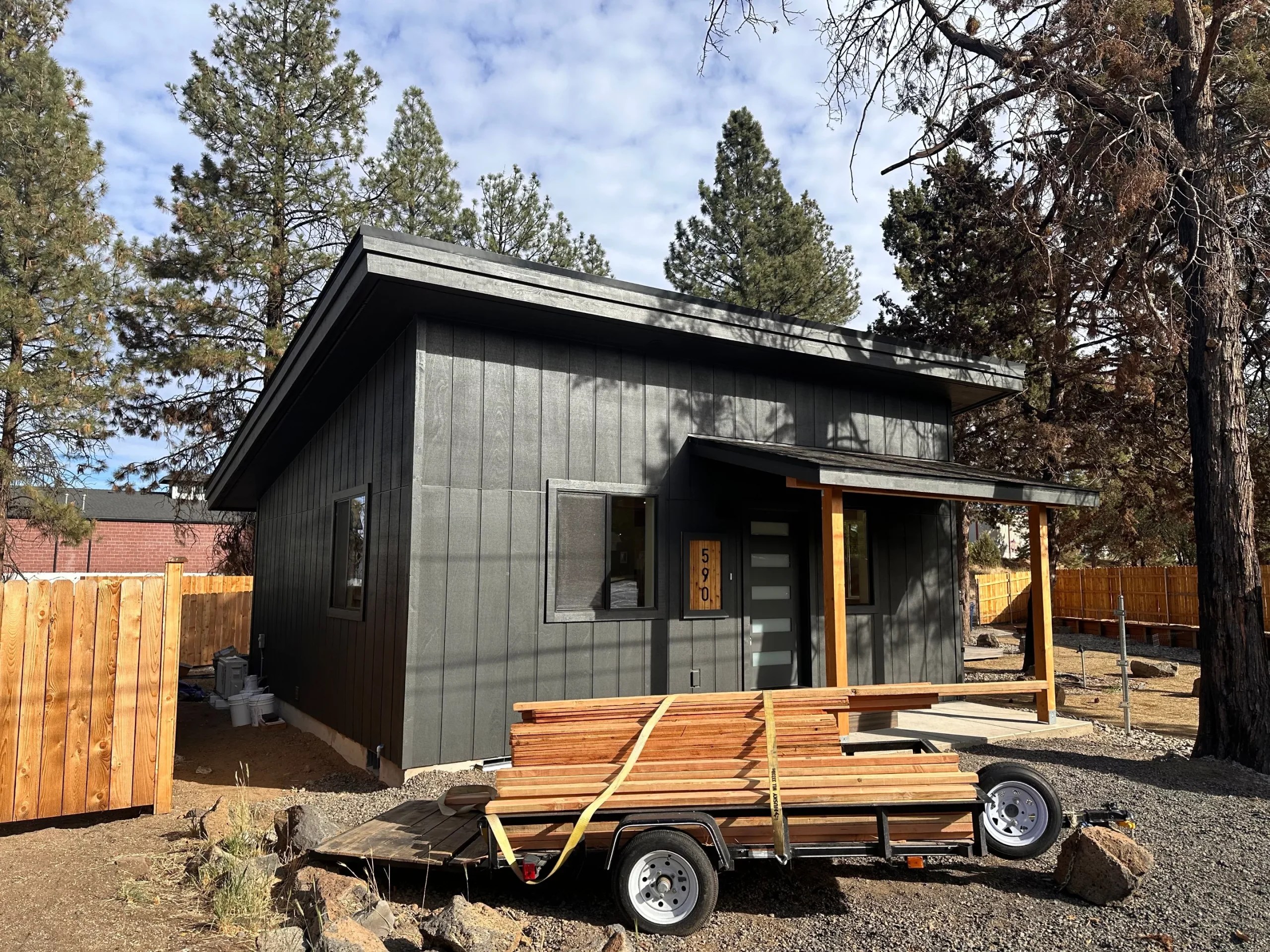
Paying for a design plan can cost anywhere from $5,000 to $10,000, according to Michael Brydges, Project Manager with Sierra James, the construction team that worked on this ADU. In building ADUs, homeowners are oftentimes forced to wait weeks to get design plans reviewed and approved. This program helps fast-track the building permit process.
According to Kerry Bell, the middle-income housing coordinator for the City of Bend, the City has identified ADUs as a crucial element of the housing continuum, which often serve as housing for the local workforce.
“We just really value the ADU’s position in the housing continuum, and it serves our community, oftentimes, as housing for our workforce, and we want to make sure that we’re removing barriers to that any way we can,” said Bell.
Research from a similar program in Eugene, and an effort to remove barriers to building different housing types, prompted the idea for these free design plans. The program also incentivizes more housing opportunities in existing neighborhoods, creates opportunities for intergenerational living and provides financial benefit to the property owner.
“It’s a really good way to maximize use of space of the land in the city, because what we don’t have is more land,” said Brydges.
The process of encouraging more ADUs within the community also aligns with one of the Bend City Council’s goals – for people who work in Bend to afford housing in Bend.
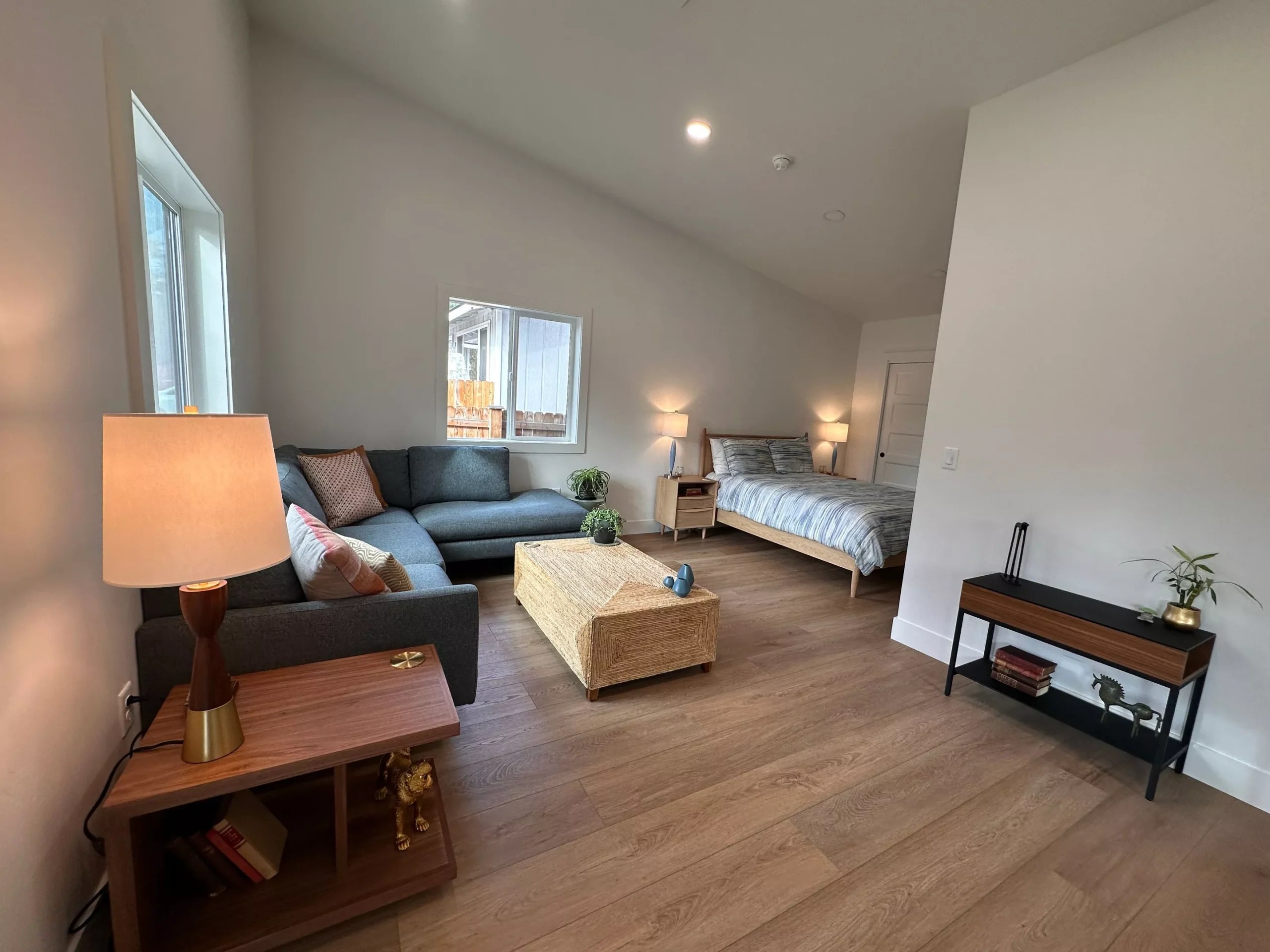
“I think that ADUs are an example of the type of housing that we want to incentivize,” Bend City Councilor Megan Perkins told the Source Weekly. “They provide that middle housing that we’re all really trying to focus on right now in the city.”
While the City of Bend currently has one design plan for people to use, it plans to add more, creating a full library of options. The design plan, as it currently stands, can’t be mirrored and would not fit every lot type, explained Bell. Additionally, revisions cannot be made to the plans. In hearing from the community, there’s an interest in design plans for an above-garage ADU, as well as a narrower plan to fit smaller lots.
“I think the next step is really to look at different free, pre-approved plan options. We’re hearing from the community that we need to have more of these different types of plans on the ready, and particularly ADUs that have a universal design, which is a design that removes barriers for people that have disabilities,” said Perkins. “Those are something that we’re looking at into the future, and then just continuing to re-evaluate different opportunities that we have to incentivize accessory dwelling units.”
Within the last few years, to continue incentivizing housing, the City eliminated some of the permit requirements that it had on ADUs in its code, said Bell. These efforts include reducing the requirements for on-site parking, removing land use permits and decreasing System Development Charges.
These changes were brought forward to chip away at costs and fees associated with building an ADU, which Bell noted were expensive and burdensome. The City felt that plans for an ADU were just one more thing that was costly for homeowners.
With the City’s measures to reduce costs, the homeowner likely saved an estimated $15,346 that would have been associated with additional City permit costs, according to Bell.
“We’re always looking at how we can have faster permit turnaround timelines, and that’s something that we are just reevaluating regularly,” said Perkins.
This article appears in Source Weekly October 24, 2024.
MAKE LOCAL JOURNALISM HAPPEN


At $352/square foot, this does not seem affordable.
200k for this? Nope, doesn’t make sense from a home owners nor investor’s perspective. Ridiculous, then we wonder why there is no affordable homes? Let’s streamline construction processes first.
In that price was that including SDC’s I wonder? Turnkey? Then the cost makes sense I suppose.