


Since 2021, a homeowner in Bend’s Larkspur neighborhood has been documenting City and County transitional housing and shelter facilities, noting a high concentration in Larkspur and on the east side of Bend.
Tom Gugg, along with others, advocates for the spread of facilities in other Bend neighborhoods, noting the potential for concentrated facilities to impact the livability of Larkspur.
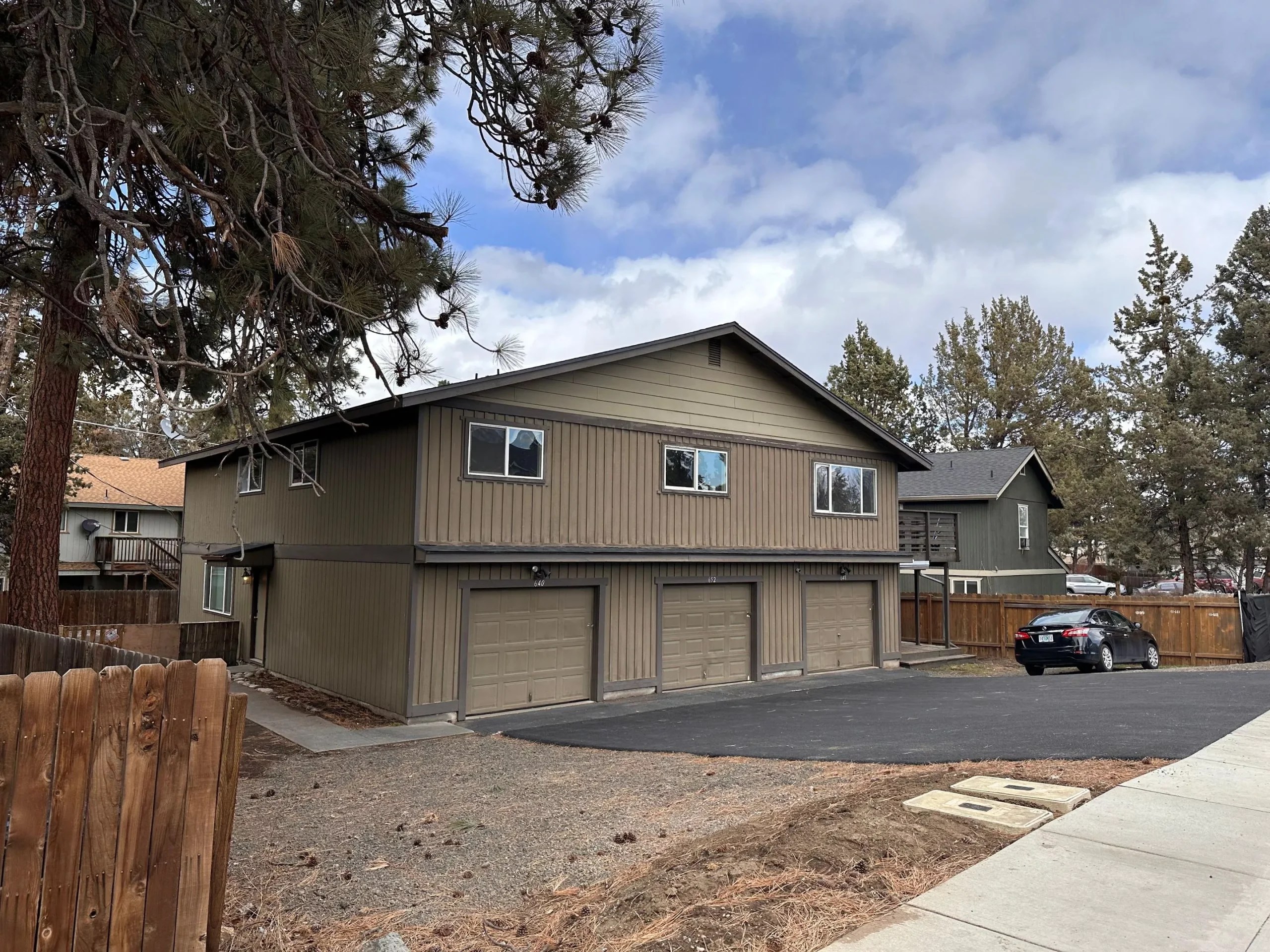
Gugg became interested in this topic after the City of Bend proposed a temporary housing facility near his home. Gugg’s Larkspur home, which he has spent a lot of time in, is a second home and is currently rented out while Gugg lives elsewhere.
He recently connected with others who were having concerns about nearby facilities through the neighborhood communication app, Nextdoor.
“We are not opposed to facilities like this. We’re all in favor of helping people at whatever level they’re at, whether they are houseless, or housing challenged. There are solutions out there, we just don’t like to see this pattern that’s getting established,” said Gugg.
A neighbor who agrees with this view of economic segregation, Ryan Rudnick, lives just a few blocks away from the recently approved Deschutes County housing for male convicts and sex offenders on Wilson Ave. He also owns and rents out a triplex near the County property.
“The economic segregation occurring in Bend is impacting my family, tenants and property in very real ways,” he said.
The Adult Parole and Probation site, which was approved in December, has garnered a lot of concern from neighbors, who were upset about the proximity to homes, parks and schools and the notice to the public. Neighbors even started a petition to sell, relocate or repurpose the property. The group calls for establishing a robust public notification process for all future facilities.
According to Bend City Councilor Megan Perkins, public notices are only required with specific types of development. The City’s public notice process is set off when a developer goes through the planning department.
Since the County facility is housing, not a shelter, it didn’t come in through the shelter code or go through the City planning department. Therefore, it did not require the siting process.
This housing site, along with other facilities listed on a map on the group’s website, caused concern for some neighbors who believe this concentration is detrimental to the neighborhood.
“As a lifetime Bend resident, I have seen the economic divide between the east and west Bend grow wider with every year,” said Rudnick. He believes this issue can impact the economic well-being of the community, exacerbate economic segregation, impact property values and marginalize residents living in those areas.
When shelters come in through state legislation, Perkins said, the City has limited control about where those shelters are located and who they serve. When siting facilities, a lot goes into the location – acquisition, availability, timing, money and project partners. “There’s a lot that is out of our control,” said Perkins.
Jen Stuart, the vice president of local shelter Central Oregon Villages, said the shelter initially had trouble finding a property. Since Desert Streams Church offered up its property on the east side, the shelter has 20 homes that are all filled.
“It has worked out very well. We had to do a lot of outreach with neighbors at the beginning,” said Stuart. Stuart understands the dilemma but notes that the east side is more affordable.
“The bottom line is affordability of a space. As we all know, living on the west side is more expensive,” said Stuart. “We have to work together as a community. This isn’t something that’s going to go away, it’s the same everywhere. Nobody wants it in their backyard.”
According to Perkins, the equitable location for a shelter is a site near access to food banks, services, transit and jobs. Stuart agrees.
“We want to have hubs where everyone can get their services in one place rather than spending their day on a bus going around town,” she said. “If all we’re doing is saying ‘you can’t do it here, you can’t do it there,’ then there’s no solution and we still have people on the street.”
Morgan Schmidt, a Bend resident who ran for county commissioner in the last election, also lives in Larkspur and is proud that the neighborhood has shelters that are caring for her neighbors.
“Bend has issues with economic segregation, but it’s not because we are working to provide shelter and housing options to people who need it in any particular neighborhood,” said Schmidt. “Our economic failure is that anyone in this city is unsheltered or housing insecure in the first place.”
This article appears in Source Weekly March 7, 2024.
MAKE LOCAL JOURNALISM HAPPEN


Perkins’ claim that the County S.O. Triplex on Wilson is not a shelter – is questionable. Why then was it awarded shelter funding, proposing shelter beds in the grant proposal, and listed as a shelter on the City website? This County P&P program appears to be shapeshifting, posing as ‘shelter’ for state funding and then posing as ‘housing’ to dodge shelter code requirements.
https://www.bendoregon.gov/home/showpublis…
BCC removed the red tape so they could bulldoze citizens, and remove their chance of opposing. They paved the way for allowing sex offenders to live near children. We will not stand back and allow this to continue.
There are a dozen children who live within 60 feet of the property on Wilson, where 10-15 male convicted sex at a time will live (up to 59 a year). This would never happen in Perkins neighborhood, EVER. Protecting children should ALWAYS BE TOP PRIORITY.
“The bottom line is affordability of a space. As we all know, living on the west side is more expensive,” said Stuart. “We have to work together as a community. This isn’t something that’s going to go away, it’s the same everywhere. Nobody wants it in their backyard.” There are three city-owned properties on the West Side currently siting idle including one with frontage on the river next to bridge on NW Portland. The city could quickly sell the river-frontage property for an extremely high price in today’s market and then use the funds to operate two year-round shelters in the other two properties (near cul-de-sac at end of NW Black Pine Place and off Mt. Regency Street). The issue is not affordability, but the NIMBYism of the West Side (which is where 5 of 7 city council members reside). Time to move to a ward/district election process for the city council in Bend.
This article points out again the intentional divide between the parts of the city between the “have and have-nots” This follows the same game plan of the over-West Side representation of the city council that can best be exemplified by the OSU-Cascades saga. The original siting for OSU- Cascades was slotted for donated land near Juniper Ridge which would have provided easier access for local commuting students located in Redmond, Prineville and Madras, but somehow that local home value enhancer suddenly got moved to the West Side to become a residential-based university. The enclave mentality of the West Side is fairly evident in the actions of the city council.
Mentioned in comment above. It’s long past time to get the good ol’ boys and girls out of Bend City Council. Long past time to district up this city and get representation from a larger scope of people/incomes.
This is going to be very difficult to do. We’ve seen the corruption with developers. These people are dug in and well funded.
The West side of Bend has simply become a playground for the out of town wealthy.
BCC and these developers will do whatever they want and nothing they don’t want to. Period. All we can do is vote all of them out.
All that said, every single mountain town has divided up people in this way. They literally bus people in to work in Sun Valley, Idaho. At least Bend is putting ‘the help’ on the other side of the tracks.
In regards to BenderMind’s comment and shelter bed count, I would say that the Bend City Council is operating unethically.