

In the past two weeks, seven conservation
groups have written to Gov. Tina Kotek and state environmental regulators
pushing for changes they hope could improve the water quality in the lower 100
miles of the Deschutes River.
As the Oregon
Journalism Project has reported, Portland General Electric and its partner
in the Pelton-Round Butte Dam complex, the Confederated Tribes of Warm Springs,
installed a selective water withdrawal tower in Lake Billy Chinook in 2009.
Their goal in installing the device was
to restore upstream fish passage blocked by the dams by altering the mix of
cold bottom water and warmer water from the top of the reservoir. They also
hoped to restore the water in the lower Deschutes to pre-dam conditions.

But the fish have not returned as PGE and
the tribe hoped, and conservation groups have increasingly reported that the
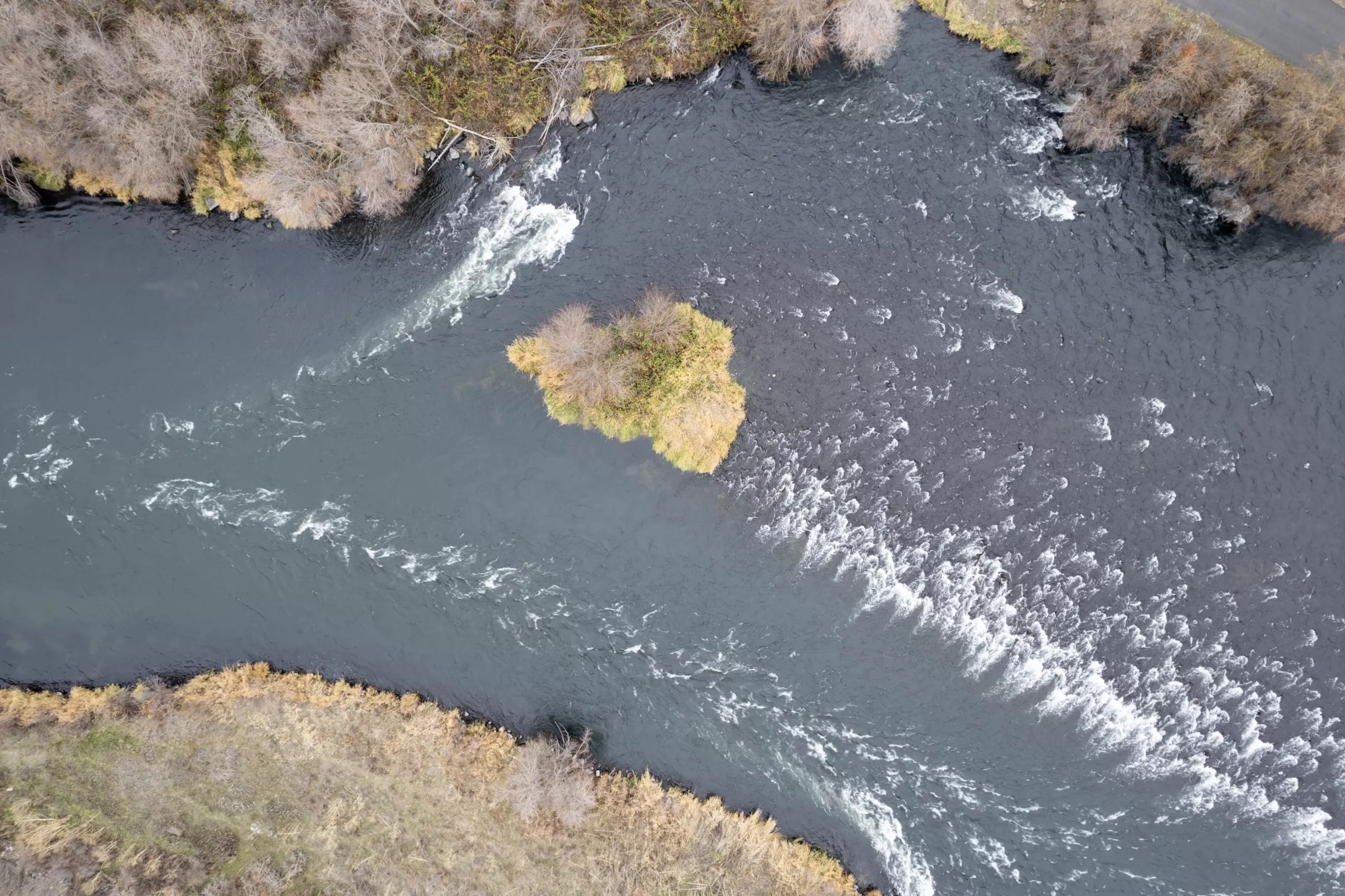
tower has resulted in warmer, unhealthy waters in the 100 miles of the river
below the dams, imperiling a beloved and economically significant recreational
fishery.
In a Feb. 21 letter to the Environmental
Quality Commission (EQC), which oversees the Oregon Department of Environmental
Quality, the 350,000-member conservation group Trout Unlimited urged the agency
to focus on a document called a 401 certification, which establishes
environmental standards for projects, such as the Pelton-Round Butte complex,
that affect bodies of water.
Critics say that since PGE and the Warm
Springs installed the selective water withdrawal tower, key indicators such as
pH, water temperature and dissolved oxygen levels have all worsened and
regularly fail to meet the standards that conservation groups believe should
apply. PGE and the Warm Springs Tribe disagree.
In its letter, Trout Unlimited noted the
fish returns have been “an order of magnitude or more” lower than PGE and the
Warm Springs Tribe hoped and that, in addition to the measures of water
quality, a pathogen deadly to spring Chinook has been found above safe levels.
Those fish are a key species in the Deschutes.
“Trout Unlimited is concerned about these
water quality and pathogen issues in the lower Deschutes River, as well as the
mostly poor metrics of the fish reintroduction effort,” the group wrote to the
EQC.
Then, on Feb. 25, six conservation groups
wrote to Kotek urging her to press DEQ on the dams’ 401 certification.
The import of the letter lies in part in
the number and weight of the signatories. Both PGE and the Warm Springs Tribe
have suggested the complaints about the lower Deschutes are coming from just
one group: the Deschutes River Alliance (DRA).
But in their Feb. 25 letter, the Center
for Biological Diversity, Native Fish Society, Northwest Steelheaders, Sierra
Club of Oregon and Wild Steelhead Coalition all joined the DRA in expressing
concerns about the river and urging Kotek to press DEQ to do something about
the deteriorating conditions of the Deschutes.
“It is imperative that new, permanent
section 401 water quality certifications be developed for the Pelton-Round
Butte project,“ the six groups wrote.
“The Oregon Department of Environmental
Quality has already delayed this process for over five years. We respectfully
request that the governor’s office direct DEQ to ensure new 401 water quality
certifications are in place and enforced by 2026.”
Anca Matica, a spokeswoman for Kotek, said
the governor will consider the new inputs. But it turns out, unbeknownst to the
groups asking Kotek to come to the Deschutes’ aid, that the governor’s natural
resources adviser, Geoff Huntington, already put DEQ on notice in a Feb. 5
letter that the governor wants improvement.
“We are asking [DEQ] for a renewed
examination of all available options for meeting Deschutes water quality
standards and the Pelton-Round Butte fish passage objectives,” Huntington wrote
to agency director Leah Felton.
“Given DEQ’s statutory charge and
standing as a member of the Pelton-Round Butte Fish Committee, it is only
appropriate that your team facilitate and lead in the exploration of creative
and dynamic solutions to the basin’s water quality challenges.”
Huntington urged DEQ to consult with PGE
and the Warm Springs Tribe. He also asked the agency to listen to others
engaged in advocating for the river’s health.
“I also encourage you to ensure your
evaluation includes a process that is both transparent and interactive with the
many citizen groups and individual Oregonians who cherish one of Oregon’s most
iconic rivers,” he wrote.
PGE spokeswoman Allison Dobscha said the
conservation groups are laboring under a “misconception.”
“The Pelton-Round Butte project is
covered by two active 401 water quality certifications — one issued by the
Oregon Department of Environmental Quality, and another from the Confederated
Tribes of Warm Springs Water Control Board,” Dobscha said in an email. “DEQ
cannot unilaterally amend or supersede the CTWS Water Control Board 401
certificate.”
She added that PGE has worked
continuously to adjust dam operations to follow the best available science and
notes that this year has seen a record steelhead return.
“PGE and the Confederated Tribes of Warm
Springs remain committed to working with our regulators, partners and all who
seek basin-wide solutions for the Deschutes,” Dobscha said.
Through the public relations firm Mixte
Communications, the Warm Springs Tribe declined to comment on the recent
communications about the 401 certification and instead took issue with OJP’s
previous reporting.
“The Confederated Tribes of Warm Springs
have serious concerns about Oregon Journalism Project’s investigative approach
with respect to our sovereignty as co-owners and operators of the Pelton-Round
Butte project, including the complexities associated with the operation of the
selective withdrawal facility in accordance with applicable federal, state and
tribal law,“ the tribe said.
“Until OJP demonstrates a better
understanding of our history, our culture and our Treaty-reserved rights, we
fear that the information we provide for this story will be ignored and result
in a missed opportunity for readers to understand our perspective.”
The next EQC meeting is March 13 and 14
in Portland.
—This story was produced by the Oregon Journalism Project, a nonprofit investigative newsroom for the state of Oregon. Learn more at oregonjournalismproject.org.
This article appears in The Source Weekly March 6, 2025.
MAKE LOCAL JOURNALISM HAPPEN


