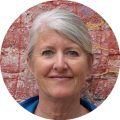
The annual Point in Time homeless count just wrapped up, with results expected in March. During last year’s count, on Jan. 27, 2025, 268 people under the age of 25 were reported unsheltered in Bend. Each of those young people have a history that many of us will never hear. Two young Bend men, one who just turned 18 and one in his early 20s, agreed to talk with the Source about their experience growing up without a home. While the two men don’t know each other, there are similarities in their attitudes of resilience, self-awareness, kindness and genuine appreciation for the good that currently exists in their lives.
One tough cookie
Kira Newman’s childhood was so chaotic, he refers to notes he’s written to accurately keep count of the number of places he’s lived and programs he’s been through in foster care. He was removed from his home at the age of three due to neglect and abuse. Throughout his childhood he lived in multiple states, attended multiple schools, moved through various foster homes, lived on the streets and in homeless shelters and attempted suicide multiple times, all before the age of 18.
Checking his notes, Newman, who uses he/they pronouns, says the magic number was 38. “Twenty-one placements, three homes and 14 programs. All prior to the age of 18. Something I don’t believe youth should have to go through.”
At various times, he was with his mother. Newman says she had multiple boyfriends, some in the military, prompting frequent moves around the country. His mother had a total of five children, but Newman only really knew a half-sister and brother. He describes those periods as a home of violence, trauma and abuse, mentally, emotionally and physically.
“I’ve run away multiple times from my mother. It’d be either me running away or her kicking me out.” Newman says the last time he ran away from her, he was 14. He says he walked from Crooked River Ranch all the way to Portland where he lived on the street and stole food from stores. “I was already used to not eating a lot growing up. Even to this day, I don’t always eat every meal.” A hotel manager found him sleeping outside and drove him to a Portland shelter that provided a bed and food in exchange for chores.
At some point, the state of Oregon became his legal guardian. “I’ve been through a lot of programs. Those aren’t always the greatest. I looked like, in their words, I looked shady, sketchy, seemed like a hoodlum. So they always thought I was up to no good,” Newman says. “So I wouldn’t want to stay in those places. They were already profiling me. I ran away from quite a few of those.” Newman is over 6 feet tall with a baritone voice.
Between his stays in foster or youth homes, he lived with staff from the Oregon Department of Human Services. “They would drop me off at school in the morning, pick me up from school, take me to get food, and then bring me to a hotel where I would spend the night with two DHS workers.”
Eventually, Newman returned to Bend and was placed in the LOFT on the west side of the city, which is transitional housing for youth ages 12-24 through J Bar J’s Cascade Youth & Family Center. He lived there nearly three years until age 18, which was the longest he’d ever lived in one place, he said. During that time, Newman graduated from La Pine High School. He got up early to catch a bus from Bend to Sunriver where he’d transfer to another bus taking him to La Pine. He went there because the school has a Junior Reserve Officers’ Training Corps, which appealed to him at the time.
Newman was also part of J Bar J’s Independent Living Program, which teaches skills in areas such as money management and career preparation. “I think for the most part, they have been one of the biggest impacts I’ve had in my life, off and on for almost eight years,” Newman says.

Even as a young adult, he struggled with low points. “I always felt like my life was gonna end at the age of 23. And I really found that that version of me, a version of all that pain, all that suffering, all that trauma, that version doesn’t need to be meaningful. I’m able to start planning my future. Start having aspirations and life goals and just building life with my wife.”
He turned 24 in January and got married last November to a woman he met at Marshall High School, before he switched to La Pine. He changed his last name from Akito to Newman, which is his wife’s name.
He’s become a voice for children going through similar, unsettling childhoods. He’s met with politicians and serves on boards for the Central Oregon Intergovernmental Council, Youth Homelessness Demonstration Program, Continuum of Care, Homeless Leadership Coalition and Youth Action. He received the 2025 Outstanding Young Leader from the Oregon Foster Club. Newman is also a peer leader for youth currently in J Bar J programs. “My work on a tri-county, state and federal level is to advocate for youth experiencing homelessness and policy changes. I’ve actually gone to Washington, D.C., twice now to talk to our state representatives and officials.”
“Watching Kira grow has been one of the most powerful reminders of what resilience truly looks like,” says Tawnie Meyer, program manager for J Bar J’s Independent Living Program. “I’ve seen Kira move from houselessness to stability, from survival to purpose. Instead of turning inward, Kira chose to become a voice for others in the community who share similar experiences. What inspires me most is that Kira didn’t just overcome hardship; they transformed it into advocacy. Kira carries their past with honesty and strength, using it to light the way for people who are still finding their footing. That kind of growth doesn’t just change one life; it changes communities.”
“For what I’ve gone through, I think I’ve done a decent amount of good and I hope I continue to,” Newman says. “For the longest time, there’s been a stigma. One just around what homelessness is. People, one, haven’t wanted to discuss it. Two, don’t even understand what constitutes homelessness. Besides that… most of the people who have been making decisions about what happens to you are people who have never experienced things these youths have in common.”
The impact of his young life continues to haunt him. “You know, I’m not an easy person, and I do have anger. I have a lot of, I’ve had a lot of trauma.” But he faces life with grit and perseverance and has been talking with a therapist.
“Everything happens for a reason. Might not be the best, but it makes you who you are,” he says. “I still have plenty of issues that I need to work through. Definitely not perfect, but regardless of all the strife and everything I’ve been through, I still want to be the best version of me at the end of the day.”
Newman has a rocky relationship with his mother, but he has made amends with his father, who was invited to his wedding, and he keeps in touch with his sister. After a transient life with no permanent home, Newman now lives in an RV with his bride, parked on private property outside his in-law’s home. “It’s actually a very nice situation. It’s a nice RV and the situation is very nice. I do see how it sounds funny and ironic,” Newman says with a big smile. But it’s a home he owns. “Stability and safety are what make any place a home. It doesn’t matter really what it is.”
An artist with a dream
Will Richardson is 18 years old and living in an apartment on the west side of Bend by himself. His early childhood was filled with Child Protective Service workers and foster homes, and cycling in and out of his parents’ home, due, he says, to their drug use. At age 14 he ran away.
“I had a falling out with my parents due to my sexuality and them not agreeing with that. So I decided to run away with my ex for about a period of three years or so.”
According to the National Network for Youth, LGBTQ+ youth are over 120% more likely to experience homelessness than their non-LGBTQ+ peers. They make up as much as 40% of all youth experiencing homelessness, despite representing only 9.5% of the overall population.
During that period, Richardson said he would be high all day every day, couch hopping or sometimes living in what he refers to as a trap house full of transient people using illegal drugs.
“There’s a good year of my life that I just can’t remember clearly because I was so messed up on drugs all the time, which is definitely something I regret.” Richardson was aware he was in a bad situation. “I’ve lived in more places than I could count.” He admits he made bad decisions, especially with a turbulent relationship involving an on-again-off-again boyfriend and dropping out of Mountain View High School. “I didn’t have any stability. Nobody to hold me accountable, so I just stopped going to school.”
At one of his lowest points, shortly after Thanksgiving of 2024, he got a call from someone at J Bar J checking on him. They placed Richardson in Canal House, a youth shelter in Redmond with six beds. “That was tough. A lot of restrictions on the things that I could do. There were curfews,” he says. “But at the same time, I knew I couldn’t really do anything about it because I had nowhere else to go. I’ve always been a really, really independent person. My freedom is something that I hold very dear to me. At first I was like, I don’t want to be here. Don’t want to be here. Don’t want to be here at all. Then I was starting to get used to it there and made a lot of friends.”
While at Canal House, Richardson decided to get back in school. He rode a bus to Bend each weekday to attend classes through Central Oregon Intergovernmental Council, which provides alternative high school education, employment training and other support. Richardson, at age 17, got his GED last May, within days of receiving keys to the Bend apartment. “So that was like a really, really big moment, like those two huge things happening in one day.”

His apartment is subsidized. J Bar J has a housing department and sub-contracts with organizations to provide case management for apartment vouchers and subsidies. Richardson says he meets with someone from NeighborImpact to determine how much of his rent will be subsidized. At first, it was a tough transition because he had no furniture. He credits a teacher at COIC for getting him a couch, lamps, pictures and other items to make his two-bedroom apartment feel more like a home. He says he’s also been diagnosed with ADHD and met with a psychiatrist. Richardson is outgoing and the type of person who can keep a conversation going. He’s unemployed but looking for a full-time job. “The biggest thing that’s bringing me stress at this moment is finding a job.”
He has seven brothers and sisters, two of whom are full-blooded siblings. His parents are now divorced but he talks with them on a regular basis. In spite of his troubled childhood, Richardson developed a strong ethos of staying true to himself. “I try to live my life as genuinely as I can. Be myself no matter what other people think. At the end of the day, I know the person that I am.” He also maintains contact with people at J Bar J. “I still go visit them all the time over at Canal House in Redmond. I visited them for New Year’s and Christmas because I wasn’t really doing anything and…I miss the staffers there. I’m still in contact with them, which is really nice. I can call them if I ever need anything or if I ever just need somebody to talk to, which is a really, really nice thing to have,” he says. “A lot of places like homeless shelters, it’s like, once you’re out, you’re out and you never hear from those people again. I put the effort into making my own little community through there.”

Richardson wants to attend college and double major in Spanish and art, which fits into his ultimate dream. “I draw all the time. Love doing art…There’s this town called Coatepec, Veracruz, which is on the eastern part of Mexico… I really want to open my art gallery there… It’s the town where one of my favorite singers grew up. Her name is Natalia Lafourcade.”
On his 18th birthday he got a tattoo on his arm that reads, “Todo A Su Tiempo” which means everything in its own time. “Kind of like a reminder. Every time I look at it, to take things slow, when I can. Not to rush everything. And yeah, you need to put work into things, but sometimes you need to let things come to you naturally. So it’s about balance.”
This article appears in the Source February 12, 2026.
MAKE LOCAL JOURNALISM HAPPEN