

As President Donald Trump issues
executive orders with effects across the nation, Oregonians, and particularly
those in rural areas, could feel the impact on their already steep electric
bills.
Presidential executive orders are
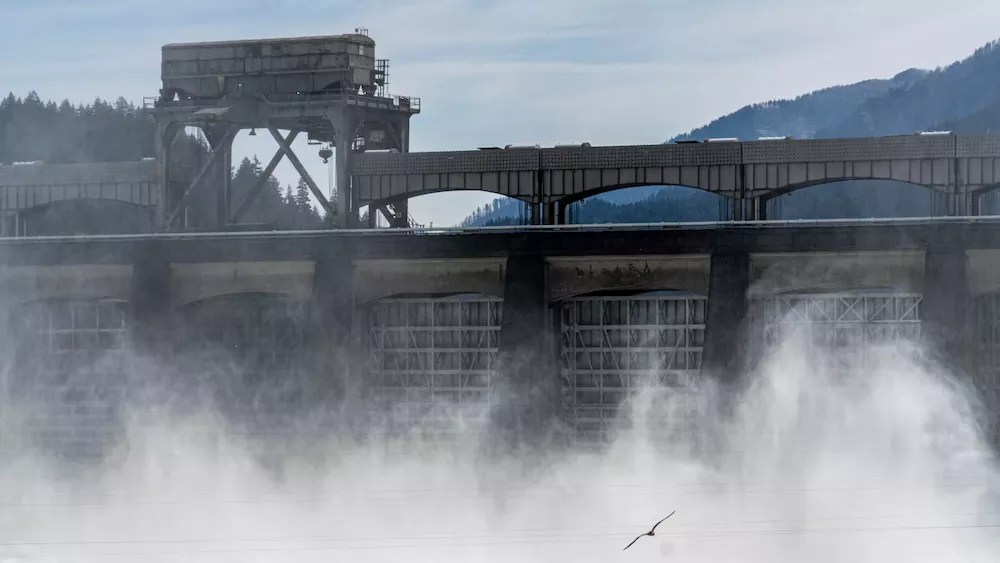
creating panic at the Portland-based Bonneville Power Administration (BPA),
which is part of the federal Department of Energy. BPA provides electricity to six Western states
from 31 dams and one nuclear plant and owns 75% of the transmission grid in the
Northwest.
Operating the dams and the transmission
grid is highly specialized work. It will be made more complicated by Trump’s “Fork in the Road” policy, urging federal
employees to retire early, and by new executive orders freezing hiring and mandating that for every four employees who
leave government service, only one can replace them. In addition, new hires can
now be made only with the approval of a representative of the Elon Musk-led
Department of Government Efficiency (DOGE). Requiring DOGE approval for hires
is a departure for BPA and other federal power marketers.
In a joint letter to Trump on Feb. 14,
U.S. Sens. Ron Wyden and Jeff Merkley (D-Ore.) wrote to Trump about the impact
he has already had on the BPA. (Oregon Public Broadcasting first reported the BPA job losses.)
“Your administration’s directives to
simultaneously buy out workers and freeze hiring has resulted in the
resignation of approximately 200 employees, the rescinding of 90 new job offers
and the looming layoff of up to 400 probationary employees. The weight of this
destabilization will bear down on the entire region, most heavily in rural
areas that rely on public utilities purchasing BPA power,” the senators wrote.
“Employees on the ground are already
warning that these actions will make it nearly impossible to strengthen and
expand the grid as needed. Instead, BPA will be forced into ‘damage control’
mode, struggling just to ‘keep the lights on.’ This is not speculation; it is
the reality voiced by those who operate our energy infrastructure every day.”
The senators asked Trump to respond to
their concerns by the end of the month. Their communication followed a similar,
if more polite, message from trade groups representing the federal power
marketing administrations — of which BPA is the largest — pushing back,
politely, on the new directives from Washington, D.C., which they fear could
hamstring the efficient distribution of electricity across the nation.
In a Feb. 13 letter to Secretary of
Energy Chris Wright, representatives from five trade groups that purchase
federal power from BPA and other regional producers noted that the wholesale
layoffs of federal employees, which are already affecting BPA and other
producers, won’t save taxpayers a dime.
“It is important to note that [power
marketing administration] employees and the work they do is funded by
ratepayers through their respective utility customers, not U.S. taxpayers,”
wrote the Portland-based Public Power Council and four other customer groups.
“This arrangement does not put extra strain on the federal budget, and provides
an extra measure of local accountability, oversight and transparency from the
utilities footing the bill for these federal PMA employees.”
Because of the BPA dams, Oregonians use
more hydropower than any other state except Washington. The electricity the
dams produce is abundant and relatively cheap and supports public
utilities from Hermiston to Tillamook to Ashland, and many parts of
rural Oregon in between.
But even though BPA power gives Oregon
some of the nation’s cheapest electricity, Oregonians — particularly those in
rural counties — are struggling to pay their electric bills.
Here’s a representation of that struggle
from an Oregon Department of Energy report that will be officially released
later this week.

Oregon electric utilities disconnected a record number of Oregonians for nonpayment
last year, and lawmakers have introduced 2025 legislation aimed at limiting future rate
increases.
The BPA transmission grid that sends
electricity all over the West is a delicate mechanism, ensuring that power from
coal and gas plants, dams and more intermittent sources of generation, such as
wind and solar, remain in balance. When that balance is lost, power prices can
skyrocket.
A BPA spokesman referred questions to the
Department of Energy, which did not immediately respond.
—This story was produced by the Oregon Journalism Project, a nonprofit investigative newsroom for the state of Oregon. Learn more at oregonjournalismproject.org.
This article appears in The Source Weekly February 20, 2025.
MAKE LOCAL JOURNALISM HAPPEN


