


Jason Whalen entered the military right out of high school, in 1994. He served for three years, spending most of his time in Korea. Born in Minnesota, Whalen moved to Salem, Oregon around 1989 and later came to Bend.
Tambi Lane, his partner of 10 years, described him as always caring for others. It didn’t matter what he was doing; he would stop and help anyone who needed it.
“He always said, ‘I need to leave the world better than how I found it,'” recalled Lane.
In May 2023, Whalen died by suicide.
In 2021, there were 6,042 veteran suicide deaths in the U.S., according to a U.S. Department of Veteran Affairs report.
President Biden addressed suicide among veterans in 2023, calling it a public health and national security crisis. For more than a decade, suicide rates among veterans have been higher and have risen faster compared to non-veterans.
A White House study noted that risk factors for suicide among service members and veterans are both similar and different than those for nonmilitary and veteran groups.
“We know, however, that service members and veterans are at higher risk for some of the common risk factors, including experiencing a mental health condition and having a physical health problem,” the study noted.
According to Stop Soldier Suicide, an organization focused on solving the issue of suicide among veterans and service members, veterans are at 72% higher risk of suicide than those who haven’t served.
According to Debbie Restivo, a veteran-specific peer support specialist, returning from the military can be extremely challenging, and barriers that exist within the community can make it even more difficult for veterans to ask for and receive the level of care they may need.

A need for services
Before Restivo began working in the veteran mental health field, she had to overcome her own challenges. She served in the military and after coming home, experienced military sexual trauma, addiction and mental health struggles.
“That’s what got me into this role. I found a way out,” said Restivo.
Restivo previously worked with Central Oregon Veterans Outreach and the Deschutes County Stabilization Center. In her current role, she finds veterans with post-traumatic stress disorder, MST and other significant mental health challenges and helps identify what they need from the community.
For people who have spent time in the military, returning to normal life can be a challenge. “It’s a totally different environment,” said Restivo.
Jake Dailey, a combat medic in Iraq, is the owner of a social purpose organization in Washington where veterans work in ecological restoration. Dailey returned from the military with PTSD. He struggled with alcoholism while trying to figure out what he wanted to do with his life.
“When we get out, we’re by ourselves and they expect us to transition to a civilian life that they’ve trained out of us,” said Dailey.
Lauren Grigsby is a Marine Corps veteran who works with organizations like Warrior Impact, the Peaceful Presence Project and previously worked with Central Oregon Veterans Ranch.
“We have a trillion-dollar budget for war, but we don’t have a budget to take care of the warriors after they’re done.” — Jake Dailey
Grigsby compares the experience of a veteran to the book “Lord of the Flies.”
“Let’s send them to war and make them operate in a code of ethics outside the pale of society. Then let’s bring them back into society.”
According to Restivo, a sense of community and familiarity can help people better adjust, giving them a place to connect.
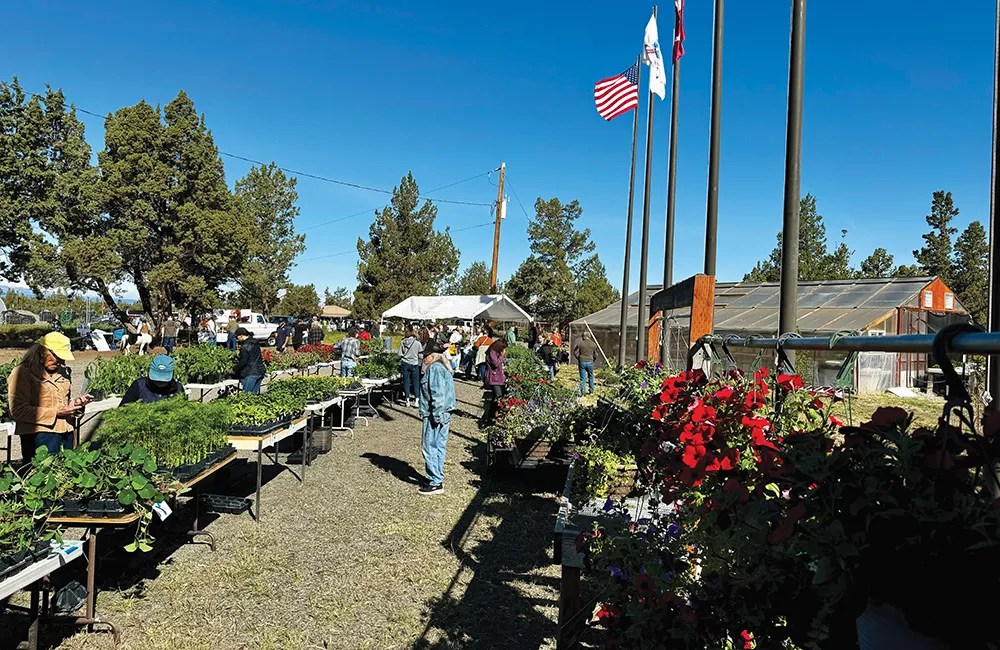
Central Oregon Veterans Ranch, a respite and agro-therapy program, fosters what Grigsby considers “old-school community.” It’s designed for veterans to show up and work on a farm alongside other veterans and staff members.
While the ranch doesn’t offer typical mental health services, Grigsby describes it as a safe place for building community, where people can also find resources through talking to one-another.
“People feel all of those natural benefits of being in nature for their mental health, but they are also around individuals that understand their lived experience and their complex trauma,” she said.
Grigsby dealt with her own mental health challenges following the military. While she didn’t originally see the ranch as a place for herself, she decided to go one day and immediately saw the positive effect it had on her. One major benefit of the ranch, she said, is reducing isolation.
“You see them all come together in this community environment, and they mentor each other, they all become friends with each other. When you have community that you feel like understands you, your quality of life goes up,” she said.
After Jake Dailey returned home from Iraq, he decided to move to the country and began homesteading. Someone in his community introduced him to forestry work. His passion for the environment continued to grow from there.
“Seeing what’s been happening with wildfires in the west… when I see a problem, I look for solutions. That’s the Army in me, I guess,” Dailey said. His business, Rake Force, pays veterans to do regenerative forest management work. While Dailey’s located in Washington, he’s partnered with the Veterans Ranch and does a regenerative weekend in Bend every fall.
Dailey believes nature-based therapy gives veterans a sense of duty, responsibility and belonging – another way to build community.
“We are not only in nature, but we are amongst people we trust, we’re building camaraderie, working as a team and we’re accomplishing a mission.”

Local support
While the Central Oregon region has various support options, finding them can often be challenging. Some individuals need higher-level services that are not always available due to a lack of resources.
“The challenges for [veterans] struggling with mental health or addiction is the same for everyone that’s struggling with mental health or addiction. There’s not enough treatment facilities or mental health providers,” said Restivo.
Veterans can seek out services from U.S. Department of Veteran Affairs, which has a clinic in Bend. However, some local providers such as Restivo see the need for expanded services. She noted a lack of providers and rushed appointments. Dailey also expressed feeling unsupported by the VA.
J.W. Terry, the executive director of Central Oregon Veterans Outreach, believes that the VA needs to do more for the community.
“Being a veteran, I advocate for veterans and advocate for more mental health for veterans, but the community as a whole, a lot of our homeless need that, whether it’s a light touch or in-depth mental help, trying to get them into those services isn’t aways easy,” said Terry.
Veterans who struggle with addiction services can have an even harder time getting help, with some people having to wait for up to six weeks to get an appointment, according to Restivo. “What we’re having to do is do it ourselves. We’re having to take care of each other,” said Dailey of Rake Force.
For mental health services, Dailey believes solutions could come easy if the government were to reevaluate its military spending. “We have a trillion-dollar budget for war, but we don’t have a budget to take care of the warriors after they’re done.”
Despite a lack of services from the VA, community support and resources can be found through several local organizations such as the Central Oregon Veterans Ranch, among other community groups that meet various times a month. The Veterans Ranch is a really good way for people to get their foot in the door and see the community, Grigsby said.
For those looking for therapy, they can often find options through the Central Oregon Vet Center. The Deschutes County Stabilization Center can help people in crisis.
“I think we have a lot of different support systems in this area. Does everyone know how to use them and know that they exist? No, so we’re constantly trying to help people understand that they exist, looking at where the systems break down and trying to make sure we’re having the right conversations, because it’s not perfect at all,” said Grigsby.
Grigsby noted the importance of all the mental health entities working together to help residents. “They don’t work perfectly, and we’re catching those holes in the system every time we do a crisis intervention,” she said.
Asking for help
Tambi Lane grew up surrounded by people in the military. She knew how hard it was for Whalen to open up about his own struggles or ask for help.
“He always felt like there were other veterans who had seen or done more… they’re the ones who need the help,” she recalled.
According to Restivo, many veterans, especially men, don’t know how to ask for help. “When they do, it’s often dismissed or attempted to be cured with medication. That’s not what we need – it’s long-term care, but that’s costly.”
The Central Oregon Veterans Ranch attempts to make people feel comfortable in opening up and hopefully accepting help.
“It’s a population of people that are actually extremely responsible and extremely resilient, and they don’t want to say, ‘I need help.’ So it’s really important they have things like that,” she said.
Lane said Whalen visited the Central Oregon Veterans Ranch a handful of times before he passed. Since then, Lane has visited the ranch several times to talk about what happened, and to have others listen.
She feels hopeful that more people these days are willing to talk about their mental health struggles. “It’s important that we just talk about everything, because so many people are so alone.”
Grigsby agrees. “It’s really important that we understand it’s OK to say, ‘I’m not OK,’ and that we continue to do the work for our own self-care and our own mental health, and that we support others,” said Grigsby. “The more we do that in all communities, that’s what’s going to make the numbers change on the suicides. I truly believe that’s the only thing.”
Deschutes Veteran Crisis Line: Call 1-800-273-8255 and Press 1 or text 838255
Veterans Crisis Line: U.S. Department of Veteran Affairs: Dial 988 then press 1 or text 838255
This article appears in Source Weekly July 4, 2024.
MAKE LOCAL JOURNALISM HAPPEN


