


The Centers for Disease Control and Prevention released the results of a troubling survey on March 31, finding that 44% of high school students in the United States reported persistent feelings of sadness or hopelessness over the past year in 2021. It’s the sharpest increase in youth hopelessness since the CDC began tracking the data, up from 37% in 2019, but the trend since 2004 is consistently toward poorer mental health among high schoolers.
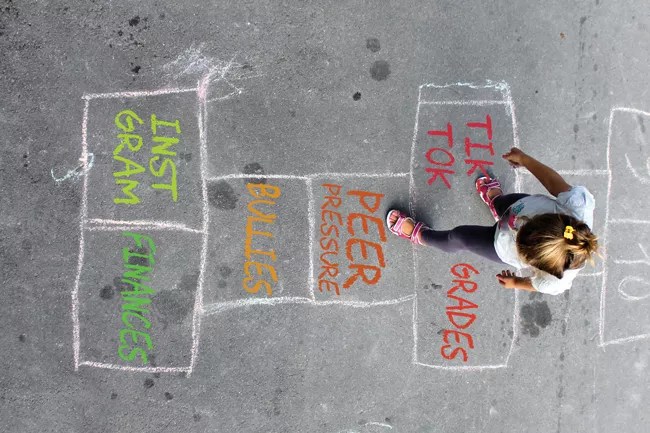
Feelings of sadness or hopelessness are most pronounced in young women (57%) and LGBT individuals (76%). The CDC narrowed down the myriad of reasons students feel more hopeless than ever into broad factors such as decreased socialization, physical and emotional abuse at home, financial stressors, loss of a caregiver, feeling a lack of belonging at school and unfiltered access to news.
“I’m sure there are several causes there. The increased social media usage; there are lots of pressures put on young individuals—I have several teens that I’m working with now that are acutely aware of all of the social justice issues and issues that marginalized communities face, and experiencing that themselves, are very plugged into what is going on in the world,” said Amy Richardson, program supervisor for Deschutes County Behavioral Health’s Child, Family and Young Adult Outpatient program.
CFYA is part of a patchwork of local services dedicated to treating teen mental health. Public health departments, schools and private programs are all seeking to address the increasing number of teens facing mental health crises. In a press release accompanying the survey, the CDC’s acting principal deputy director says research shows proper support systems can reverse these trends, but those services are stretched thin. Oregon has the fifth-highest rate of serious mental illness in the U.S., according to World Population Review. Mental Health America, a nonprofit mental health advocacy group, weighed prevalence of mental health and access to care: Oregon ranked last for adults and 47th for youth.
“I just know that there is a huge need for mental health services, and it feels like the need keeps growing. And we’re doing the best that we can to respond to it,” Richardson says.
The in-school approach to teen mental health
Fewer than half of the respondents to the CDC survey reported feeling close to people at school during the pandemic. As learning became digitized, students felt less connected to their peers when conferencing over Zoom. A Harvard Graduate School of Education survey found loneliness among students spiked more significantly than any other group.
“There are many intentional actions taking place in schools every day that are really centered around student wellness, which is tied directly to a sense of belonging,” wrote Jenifer Hauth, Bend-La Pine Schools’ director of social, emotional and mental well-being, in an email.
Those actions can include anything from bus drivers personally greeting students, allowing for a wide range of clubs, teacher intervention and anti-bullying programs. Social and emotional support is only one facet of school counselors’ jobs, but they can often be a bridge to long-term care. In schools, long-term care can involve connecting students to school psychologists, or referrals to the district’s two school-based health centers. Every school in the district is staffed with at least two people trained in Applied Suicide Intervention Skills Training, and all staff are trained in “Question, Persuade, Refer” suicide prevention training.
“If they see a youth struggling in that arena they can intervene with the best practices in evidence-based ways,” said Caroline Suiter, Deschutes County’s suicide prevention coordinator. Training often gives teachers a better understanding of the warning signs associated with mental health crises. “One thing that we always talk about is that if you see a significant change, if a youth tends to operate one way… and then it shifts to the other side of the spectrum, that would be a warning sign.”
Schools can identify potential mental health issues, but for comprehensive treatment students will need to turn to health care professionals, or in some cases semi-professionals.

Youthline
Sometimes the people helping students suffering a mental health crisis are other students. YouthLine, a call/text/email crisis hotline for people under 20, is staffed with students who attend over 60 hours of training before they can begin talking with contacts. From 4-10 pm, student volunteers will usually talk with five different contacts simultaneously throughout their shift. The peer-to-peer model proved to be effective at pulling students out of a crisis.
“From a non-high acuity call, we can de-escalate about 98% of the time,” said Mel Butterfield, assistant director for YouthLine’s Central Oregon Call Center. “High acuity—so those ones that are actively talking about suicide, or suicidal thoughts or ideology, those ones are a little bit less, between 94 and 95%. But still, you’re above 90—to me that’s hugely impactful.’
Volunteers say a lot of their contacts call or text the hotline about issues among family and friends. YouthLine’s advantage over more traditional counseling and therapy is that the volunteers at YouthLine have first-hand experience about issues facing teens, and they’re often more comfortable expressing that to peers than professionals.
“Sometimes we get contacts that only want to talk to a certain person. It may be someone has an eating disorder, and they want to talk to another girl who’s also a teenager who also maybe struggles with that, because they can relate,” said Paige, a Youthline volunteer who provided just her first name to maintain YouthLine’s anonymity. “We already have that ground level of trust with a lot of people.”
“I just know that there is a huge need for mental health services, and it feels like the need keeps growing. And we’re doing the best that we can to respond to it.” —Amy Richardson
Public Health’s response to youth crises
Hotlines like YouthLine are a cornerstone of suicide prevention, but if someone calls YouthLine outside of its hours of operations they’re referred elsewhere. Deschutes County operates its own 24-hour crisis line, and a Stabilization Center for people experiencing a crisis. The Stabilization Center is open to adults and youth, and individually tailors treatments for each individual, but there are additional considerations to account for with younger visitors.
“For kids, we’re often having to consider more than just the child, and we want their families to be involved and have that support system in place,” said Holly Harris, program manager for Deschutes County Behavioral Health Crisis Services. “Oftentimes, we really are helping parents understand how to help their child once they leave our facility.”
The stabilization center can only see clients for up to 23 hours—otherwise the center would be categorized as a licensed residential treatment facility. Most immediate crises can be resolved in four to six hours, Harris explained, but as a public health program it has pathways to ongoing care.
“We have case managers here that can help people get set up with entitlements and reduce barriers to getting access to treatment. We have peer support specialists—they’re individuals with their own lived experience that can walk alongside individuals to help support them, even after their crisis resolves. We have access to medication. And we have, of course, our mental health therapists here,” Harris said.
Amy Richardson, program supervisor for Deschutes County Behavioral Health’s Child, Family and Young Adult Outpatient program, said national trends of increased rates of depression have borne out locally, including in rises in emergency department visits. Treatments can cross over with what’s offered at the crisis center, like peer support and access to medication, but what CFYA really excels at is ongoing therapy sessions.
“Therapy would be paramount, whether that’s individual family or group therapy,” Richardson said. “The typical course of treatment is completely individualized. So, depending on the diagnosis, and what’s recommended for that, there are different therapies that would be recommended based on whatever the diagnosis and current need is.”
Other Avenues
Private therapy practices and counselors also help young people. One of the more ambitious models practiced locally is outdoor therapy. Deschutes Wilderness Therapy plans months-long expeditions into the wilderness where students engage in therapy and accept roles to maintain life in the woods.
“It’s about building resiliency, self-awareness, confidence, communication skills. The students that graduate from the program are accomplishing something that very few people have accomplished,” said Drew Hornbeck, co-founder of Deschutes Wilderness Theory.

The setting in Deschutes National Forest also helps ground students in a more natural daily rhythm without the potential distractions of phones and television.
“Right now, technology has evolved so quickly. And when you’re enduring a lot of stress, especially at a young age, all of a sudden you have all the social media, all the screens and the screen addiction issues,” said Andrew Scott, executive director at Deschutes Wilderness Therapy. “The natural healing power of the outdoor setting presents some of the best opportunity to get grounded, to start to have a certain presence within just the role, the day, the life, to be able to start to have a presence and start to be back in your body, to be introspective.”
Such programs are expensive to run, though, and expensive to participate in. The program costs over $500 a day, making it unaffordable for many Central Oregon families without a scholarship or insurance, which Scott said made up a little over half of their clients. Barriers like cost and availability aren’t limited to Deschutes Wilderness Therapy, it’s a problem with a lot of mental health programs that face the same staffing, funding and operational challenges as other health care providers, Sawyer said.
“Adolescent hospitalization options are really limited. Most of the residential treatment programs across the country are full, and are taking up to six months to get somebody into. And then, there’s a good number of programs that have been closing,” said Steve Sawyer, senior clinical consultant for Deschutes Wilderness Therapy. “Most programs have been moving more and more to lesser and lesser acuity, and only accepting that, while our high acuity is rising and rising.”
This article appears in Source Weekly June 2, 2022.
MAKE LOCAL JOURNALISM HAPPEN


My son said kids are mean to one another in school and very little learning actually happens. He got his GED and driver license at 16. Now he would like employment that has meaning. Anyone out there need a bright young computer tech?
Much of the source of these issues are a fundamental lack of respect that was magnified by the style that trump brought to leadership.
Thank you for this article. I would like to address something that I feel is extremely important about the depression we are witnessing in children. I have read many data driven books, watched documentaries, as well as witnessed and observed as a substitute teacher in BPLS’s the addiction students have to devices and how these devices have stolen our children’s happiness and focus.
The pandemic might have caused isolation but what happened during the pandemic? The children were heavily using devices. Children are unhappy, feeling disconnected and not focused because of the internet, social media and gaming. I believe technology is a tool if used appropriately but most people don’t use it appropriately as it was created to cause addiction. It is not allowing for proper communication thus they are not making meaning connections and friendships based in reality.
I am extremely concerned about our education system and the role these devices have in schools. The Bend La Pine School district needs to really take a stance on eliminating these IPADS as a primary learning tool. These IPADS were rolled out to our students without parent consent or without having data that shows how it will affect our children and their learning. And parents need to take a stance on electronic devices and smart phones they are allowing their children to have as these devices and the content on them are affecting their well being and their behaviors. The behaviors that children are demonstrating at school and in public spaces is absolutely unacceptable and a lot of this behavior is due to the content being allowed on these devices including but not limited to social media content and how they use them to communicate.
I am sure many readers have seen the documentary, “The Social Dilemma” and if you haven’t and you have any type of device, it really is an important and educational film. I also recently read the data driven book, “Stolen Focus” by Johann Hari. This is a book where the author interviews over 200 psychologists, behavioral scientists and doctors as well as goes on a device diet to reveal how devices have taken over our lives and the effects from them. If you care about yourself and your children, do yourself a favor and read it. If you can’t make the time to do this for the greater good of your well being, well that should tell you something. You can also find a two part series of an interview with the author on Oprah Winfrey’s Podcast Super Soul which was released in March of 2022. However, the book is where all the data and deep explanation happens.
Bend La Pine Schools rolled out these IPADS without doing the research. When we arrived in Bend in 2018 my third grader was provided an IPAD. During a teacher led and what they called “Safe Search” a pornography video came up on her IPAD. Her third grade teacher at William E. Miller Elementary said to me “These things are going to happen sometimes” it not perfect. REALLY? This is not okay in my view. It should never happen and if you can’t guarantee inappropriate content will not be displayed then don’t give my child an iPad !!
There also was no structure of reporting this type of incidence so BPLS was not prepared for any type of fallout from these devices. The administration at the school didn’t know what to do. The assistant principal even told me, “I really don’t know what to do”. My children had multiple situations where inappropriate content was popping up on their IPADS and they had access to things I would never allow them to have access to. So my husband and I scheduled a meeting with Shay Mickelson who was the superintendent at the time. After pleasantries of introduction he flat out told me IPADS are here to stay. He advocated for these devices to be in our children’s hands without understanding the implications, impacts or consequences of them. He said what my daughter saw was unfortunate. The only thing that was done was that the IT director at the time tried to figure out how to put up firewalls but this was not sustainable. They didn’t even know if tracking or location services were turned on these iPads. So, now I am in the position to explain to my eight year old daughter what porn is in the 3rd grade after she went to Waldorf School since she was two. This is completely unacceptable. And by the way, many of these tech industry creators and employees who designed these devices, apps and games were sending their children Waldorf schools because they didn’t want their children exposed to this dangerous and addictive technology. They even made a film at our school called, “Why Waldorf Works” interviewing these tech executives.
I am really not understanding why BLPS administrators and the school board members are not concerned about how detrimental these IPADS are to our children and how it is affecting their learning and mental health. How can they not see the correlation?. What does it take to get pen, paper and books in front of our children again. I really want this answered. My children have had some amazing teachers and if we want to keep these amazing teachers we need students who are behaved, curious, connected and eager to learn. I did not witness this. There were very few students who displayed these attributes for learning.
I witnessed and observed as a substitute teacher in middle school, having these devices are causing so many behavioral and policing issues at school.
And for me it begged the question, who are the parents raising these children? I was appalled by the behaviors I witnessed which included vulgar language, inappropriate dress code, total lack of respect for themselves and others. The talk of vaping, drugs, inappropriate sexual verbal innuendos, lack of engagement or interest in any meaningful learning. Lack of eye contact. They are disruptive, rude, obnoxious and so overly aware of inappropriate topics for their ages. And many students were attending to content on their iPads that was not school related, flipping back and forth as I walked around the room. What I witnessed was so disturbing to me that at the end of the day I felt like I wanted to pull all three of my children out of BLPS’s and never return. I also felt a strong compassion for the teachers and administrators having to deal with these kids and the policing of devices on a daily basis.