

If you want to set the burdens of the world aside for a few minutes by watching beautiful birds, you can hike up a mountain or drive to a remote lake or forest. Or, you can simply head to a parking lot.
Take, for instance, the now-empty parking lot at the former Costco in Bend, where dozens of orange-breasted American robins perch through winter in the nearby ash trees. If you scan the trees — surprise! — you also might spy the pale-yellow breasts of cedar waxwings. No offense to the robins, but waxwings are real lookers, with a slicked-back hairdo, robber’s mask and bright yellow tail tips.
Those two bird species are among the many that hang out in parking lot-adjacent ash trees to feed on the reddish berries, a valuable source of winter nourishment. According to local birder Chuck Gates, parking lots are also convenient places to watch birds foraging for many other types of food, including everything from insects to chicken nuggets. (Gulls seem especially fond of McDonald’s parking lots.)
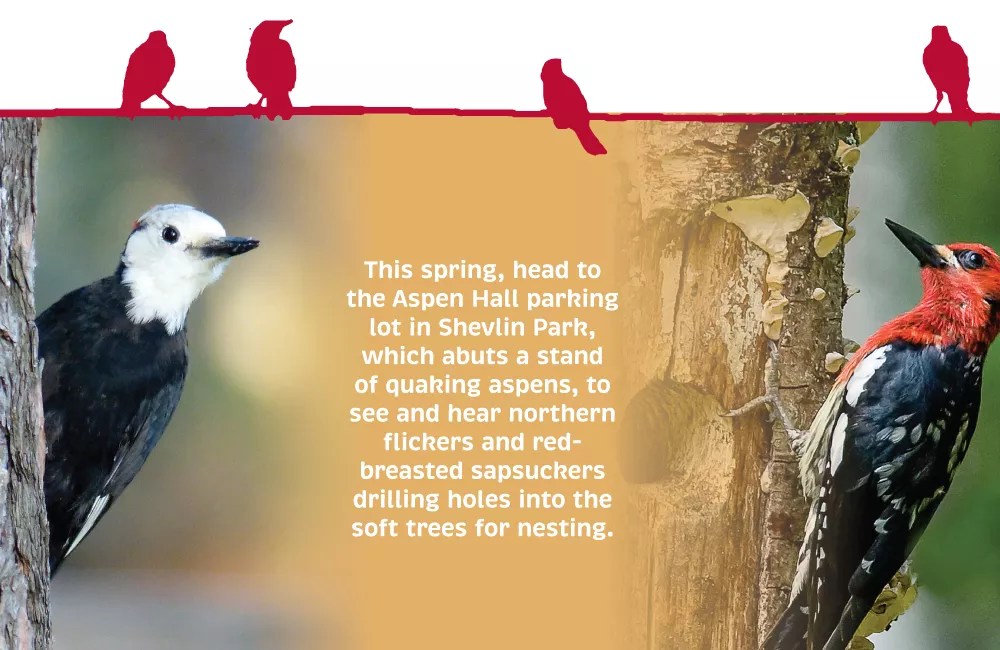
In Sisters, insects are on the menu for handsome white-headed woodpeckers, which can be spotted probing the bark of older-growth ponderosa pines that surround the Best Western parking lot. In spring and fall, the parking lot of the Boys & Girls Club in Bend is the best place to watch Vaux’s swifts dashing around at dusk to catch their final insect meals before they swirl like a tornado into the abandoned chimney.
It turns out live insects are challenging to catch, so other birds have smartly turned to the, uh, prepared variety. Before their populations declined, you could watch, in horror and delight, as burrowing owls picked dead insects off truck grills at the Brothers Oasis Rest Area. These days, Gates notes that you can head farther afield to see sagebrush sparrows pick at the grill buffet in the parking lot at Fort Rock State Natural Area, or watch sage thrashers do the same at The Narrows store near Malheur National Wildlife Refuge.
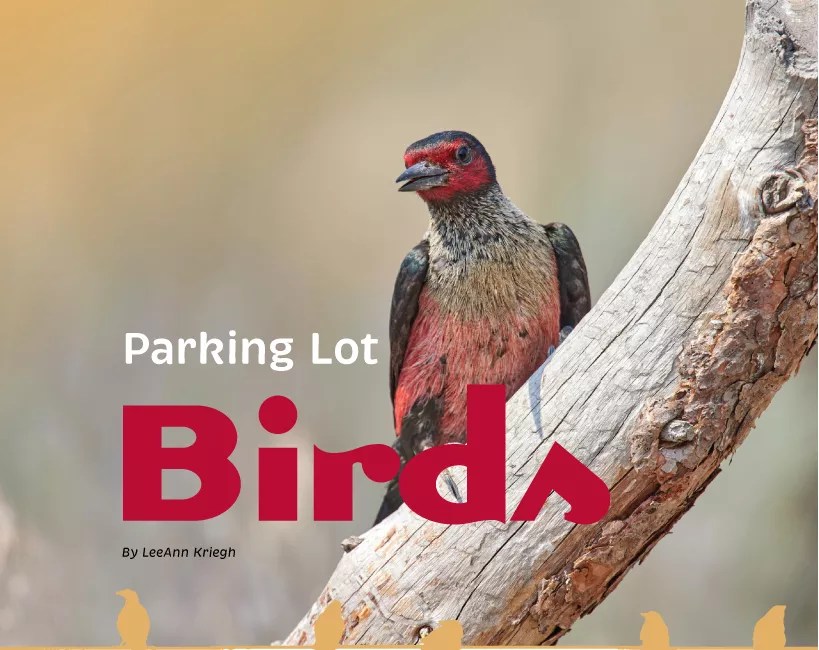
Along with feeding at parking lots, birds nest in nearby trees. This spring, head to the Aspen Hall parking lot in Shevlin Park, which abuts a stand of quaking aspens, to see and hear northern flickers and red-breasted sapsuckers drilling holes into the soft trees for nesting. In May and early June, the parking lot provides the perfect vantage point for watching those species feed their young, or to look on as other birds — including big, colorful Lewis’ woodpeckers — move in to raise their chicks in some of the abandoned holes.
In Sisters, insects are on the menu for handsome white-headed woodpeckers, which can be spotted probing the bark of older-growth ponderosa pines that surround the Best Western parking lot.
It’s important to note that while some gulls, pigeons and other urban species have adapted well to life in and near parking lots, many others have not. For example, at night and in bad weather, waterbirds often mistake parking lots for bodies of water and come in for a hard, sometimes deadly, landing.
Gates, who wrote the “Guide to Common Birds of the Deschutes Canyon Area,” recalls seeing two wood ducks in the remote Fort Rock parking lot, where there’s no water around for miles. “Those ducks were clearly off course, but at least they could escape their predicament,” he says. “Loons, grebes and diving ducks need a running start in water to become airborne, so a mistaken landing for them means certain death if they’re not rescued.”
No doubt waterbirds, and every other bird species, would prefer that we not pave paradise and put up parking lots. However, the fact that some have adapted, at least to some degree, gives all of us — including those with limited time and mobility — the opportunity to delight year-round in the beauty of a wide range of birds.
LeeAnn Kriegh is the author of two field guides to common plants and animals found in Central Oregon and the Portland area. A new version of her first book, “Nature of Bend,” will be released by Mountaineers Press on May 1.
This article appears in Central Oregon Pets Spring 2025.
MAKE LOCAL JOURNALISM HAPPEN


