


As COVID-19 continues to affect Central Oregon, we’re experiencing a number of growing struggles, including shortages in toilet paper, masks, test kits, Lysol and other supplies.
Also add rice to that list.
Rice is increasingly becoming unavailable in grocery stores all around Central Oregon, and is even sold out on online Asian grocery stores. Since just last week, stores including Smart Food Services, Costco, Walmart and Fred Meyer have been completely sold out.
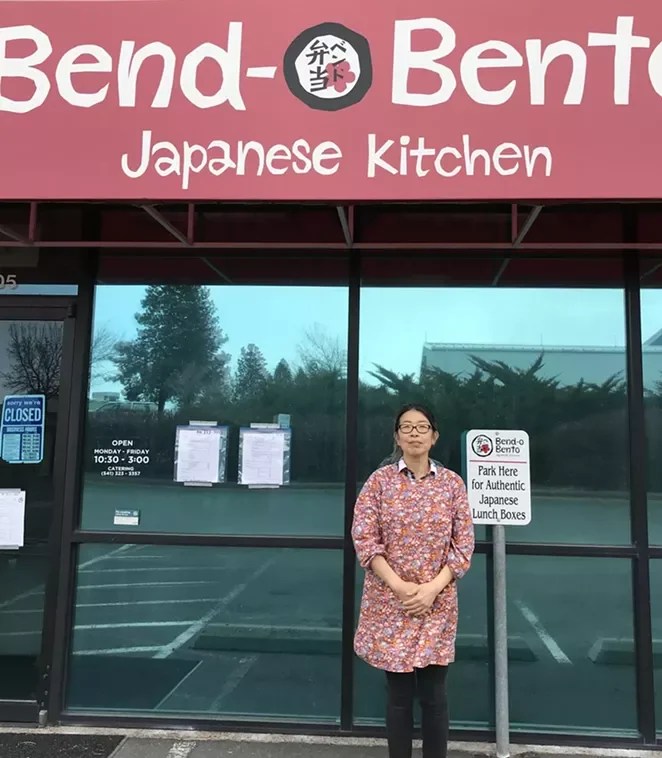
According to Yukiko McLaughlin, owner of Japanese kitchen Bend-O-Bento, the shortage is hitting hers, and other local businesses the hardest. Like Bend-o-Bento, many restaurants in town have switched to takeout only.
“My Bento business has been affected so much. My restaurant uses about 50 pounds of white rice a week. There has been no rice at Smart Food Services (Cash & Carry), Costco or any other grocery stores in Bend since last week. I have only 50 extra pounds left. If I can’t buy rice in a couple of weeks, I have to plan to use something different such as noodles instead of rice. That will cost more,” she said.
So, what’s behind this sudden scarcity of rice? Since returns for rice (among other supplies) are not accepted at Costco, it would seem that customers are buying more than they need in order to feel secure. We contacted distributors such as Sysco in order to find out more about the sudden shortage. Calls were not returned by press time—though shortages of staples such as rice and bread have been reported elsewhere too, thought to be the result of people stocking up, as well as disruptions in global supply chains.
“The label ‘Chinese virus’ might direct people’s frustration towards certain people or nationalities rather than productively thinking of what we can do to slow the spread of the virus that is impacting real people here and abroad.” -Yasuko Jackson, Central Oregon resident
COVID-19 and racism
Asian Americans specifically are affected by COVID-19 in other ways as well. The World Health Organization has warned President Trump against calling COVID-19 “the Chinese virus,” to avoid placing blame on a specific group of people and further inciting racism.
Still, Asian-Americans are experiencing racism all around the U.S. in the forms of verbal and physical assault. Yasuko Jackson, an Instructional Design Specialist at Central Oregon Community College, relayed that although her or her family has not experienced any comments in the local area, she has had friends who have experienced more racism since the advent of novel coronavirus, thought to have originated in China.
“One of my Chinese friends had someone in a store say something insensitive to her. It was more like a ‘you Chinese stay away’ type of comment… [Trump’s nickname for the virus] does make me concerned, but not because of my safety as an Asian, but how the label “Chinese virus” might direct people’s frustration towards certain people or nationalities rather than productively thinking of what we can do to slow the spread of the virus that is impacting real people here and abroad,” Jackson said.
Similarly, McLaughlin said kids at school had asked her daughter, who is of Japanese and American descent, whether she had coronavirus.
On its COVID-19 updates page, the Oregon Health Authority issued a reminder about discrimination as it pertains to the virus:
“Oregon is seeing an increase in incidents of discrimination and harassment related to the COVID-19 virus,” OHA reported. “It is important that all people, businesses, and other organizations act on facts, not bias or xenophobia. Health officials confirm there are no links between COVID-19 infection and a person’s race, color, gender, sexual orientation, gender identity, religion, ability, or national origin. COVID-19 can infect anyone who is exposed to it, and anyone can spread COVID-19.”
McLaughlin and a handful of the Asian Americans in Central Oregon who we surveyed for this story, who requested to remain anonymous, said they, like others in the community, are focused on working on ways to help, including sewing patterns for cloth face masks to donate to local hospitals.
-Miina McCown is a student intern at the Source Weekly.
See all our Coronavirus coverage at our Coronavirus HQ.
This article appears in Mar 18-25, 2020.
MAKE LOCAL JOURNALISM HAPPEN


