It’s root vegetable season and these underground wonders are flavorful and full of nutrients such as fiber, potassium and vitamin C. We’re all familiar with carrots, sweet potatoes and beets. But there are so many more roots to choose from such as rutabagas, parsnips, celeriac, Jerusalem artichokes – the list goes on and on. This week, however, the often overlooked turnip is in the spotlight.
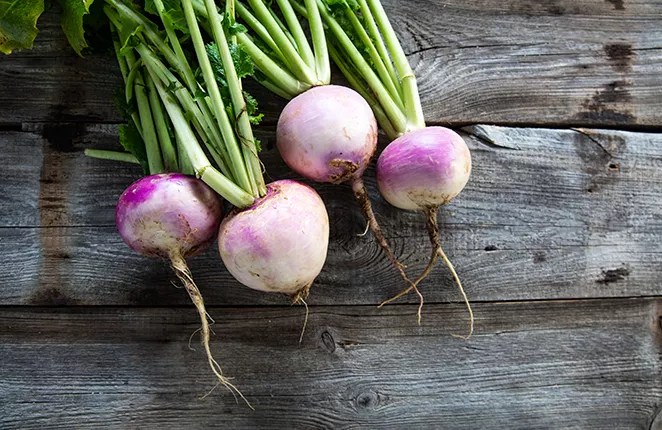
I see you crinkling your face, because either your grandmother made you eat some mushy turnips once upon a time and all you remember is a bitter, bland taste or you’ve never tried turnips because no one you know cooks them and you rarely see them on a restaurant menu. I’m here to help you through this and turn you on to turnips.
Wild forms of turnip and its relatives, the mustards and radishes, grow in western Asia and Europe and the cultivated root vegetable is grown in temperate climates around the world. While the skin coloring may have shades of purple or red, the interior is typically white. Considered both a root vegetable and a cruciferous crop, the leaves are edible as well as the round, hard flesh. Turnip greens are a popular side dish in the southeastern U.S., similar to mustard greens and collard greens.
Rich in vitamin C, high in fiber and containing essential nutrients such as calcium and vitamin K which make for strong bones, turnips are also lower in carbs than a potato, so surely this fella deserves a place on our tables.
When choosing a turnip, know that the smaller it is the sweeter it’s likely to be. You may see some very small baby turnips that are yellow, orange and red; these will have a milder flavor and could be a good place to start if you’re convinced you don’t like the taste of turnips.
This creamy puree goes well with roasted salmon, steak, chicken and other dishes where you might typically serve mashed potatoes.
You can use baby or regular turnips in this turnip purée recipe. There are some other ingredients that you might not be familiar with as well. But they’re all worth having on hand and they all have a long shelf life if stored according to the directions on the label, so why not go for it and all some new flavors to your repertoire.
Let’s start with miso. Miso is a traditional Japanese seasoning. It’s a thick paste made by fermenting soybeans with salt, seaweed and other ingredients. High in protein and rich in vitamins and minerals, it’s used for sauces and spreads, in pickling vegetables or in miso soup.
Tamari is a Japanese soy sauce. It’s made by pressing the liquid from miso and has a smoother, richer taste than regular soy sauce. And since it’s made only from fermented soybeans and no wheat, it’s gluten-free.
Sesame oil is a vegetable oil derived from sesame seeds. It has a long culinary history, as sesame was first cultivated more than 5000 years ago and was one of the first crops processed for oil. It has intense flavor so you only use a tiny bit in this recipe. You can substitute regular vegetable oil or canola oil for the sesame oil if you prefer.
Creamy Turnip Purée
This creamy puree goes well with roasted salmon, steak, chicken and other dishes where you might typically serve mashed potatoes.
Makes 4 servings
- 3 large turnips, scrubbed clean, trimmed and cut into 1-inch chunks, peel if you desire
- Pinch of salt
- ½ cup heavy cream
- 1 tablespoon miso
- 1 teaspoon tamari
- 1/2 teaspoon sesame oil
- 1 teaspoon sugar or monk fruit sweetener
- 1/4 cup reserved cooking liquid
Cover turnips with water in a large pot. Add salt and bring to a boil. Cook until turnips are tender. Drain turnips, reserving ¼ cup of cooking liquid. Put turnips, cream, miso, tamari, sesame oil and sweetener in a blender and blend until smooth, adding small amounts of reserved cooking liquid as needed to reach desired consistency.
Related Stories

Ginger Miso Pan Roasted Salmon
This article appears in Source Weekly October 5, 2023.
MAKE LOCAL JOURNALISM HAPPEN