

Over the last several years, the City of Bend has worked to improve its transportation systems, aiming to provide more ease for pedestrians and bikers moving through town. Its most recent project, prompted by a state rule, will look at implementing low-car districts, or “people streets,” by conducting a case study on Bend’s Core Area and downtown Bend.
While there are no current plans to change streets as part of the study, downtown streets like Oregon and Minnesota Avenues will be explored as potential areas for limiting or restricting car use. This generated concern from downtown business owners.
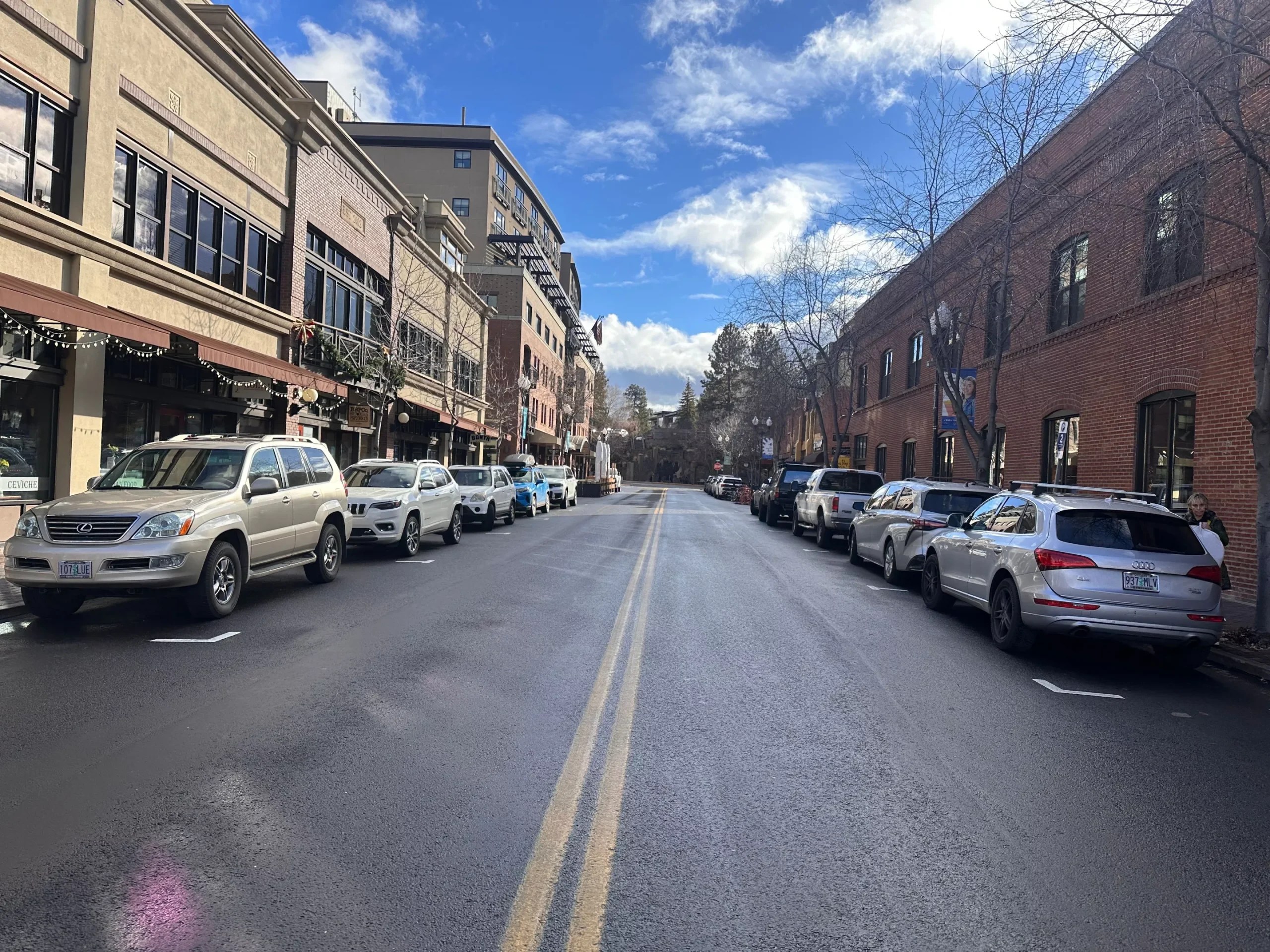
The City invited residents to learn about its plans at an open house on Nov. 15, presenting photos and posing questions to help better understand the community’s interest.
“There’s a lot of room for improvement in the transportation system to accommodate all users, so I think people streets helps set the policy, direction and vibe of how you develop these low-car or no-car areas and streets,” Matt Muchna, executive director of the community planning organization Envision Bend, told the Source Weekly at the open house.
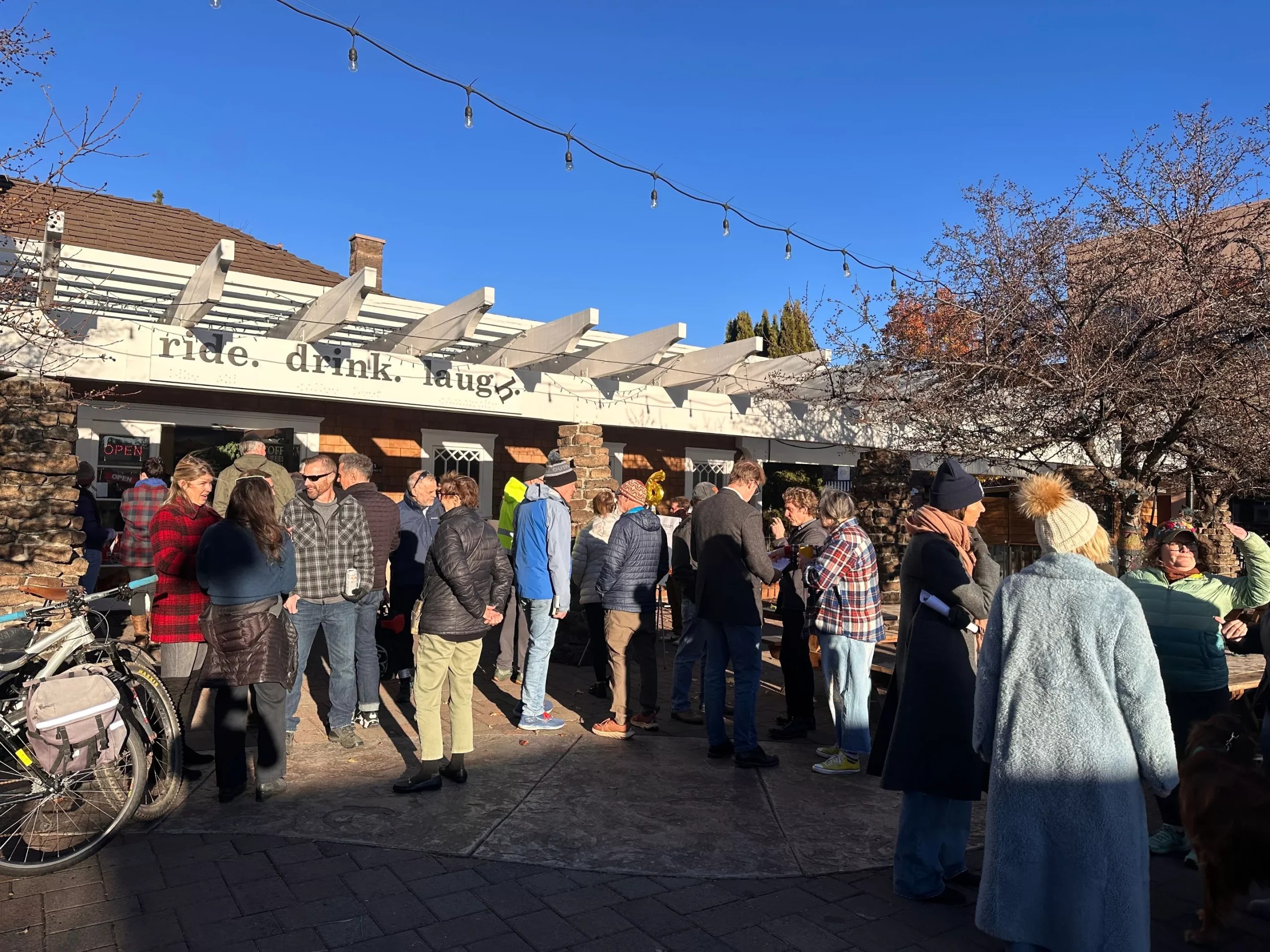
An Oregon Administrative Rule calls for cities with a population of over 100,000 to allow for the development of low-car districts, to create safer pedestrian and biking routes. These districts, designed for people to walk, bike and roll, call for car traffic to be slowed down, reduced or restricted. An example of this in Bend would be the downtown Brooks Alley.
According to Allison Platt, the City’s core area project manager, part of the City’s task is to define what these areas could look like and where they could go, which will be addressed in a study funded by a $150,000 grant from the Department of Land Conservation and Development. The money will go to engineering and design consultants.
The study, meant to inform future policy recommendations, will explore low-car areas along a route in Bend’s core area and downtown Bend between Juniper and Drake parks, addressing concerns about connections to and from the planned Hawthorne Bridge.
Since the City started concepting this idea over the summer, members of the Downtown Bend Business Association say they have felt left out of the conversation, noting a lack of communication and involvement in the process. McKenna Mikesell, the Downtown Bend Business Association board president, said the organization has a number of concerns about this proposal and hopes the City will include it in future planning on this topic.
Business Barriers
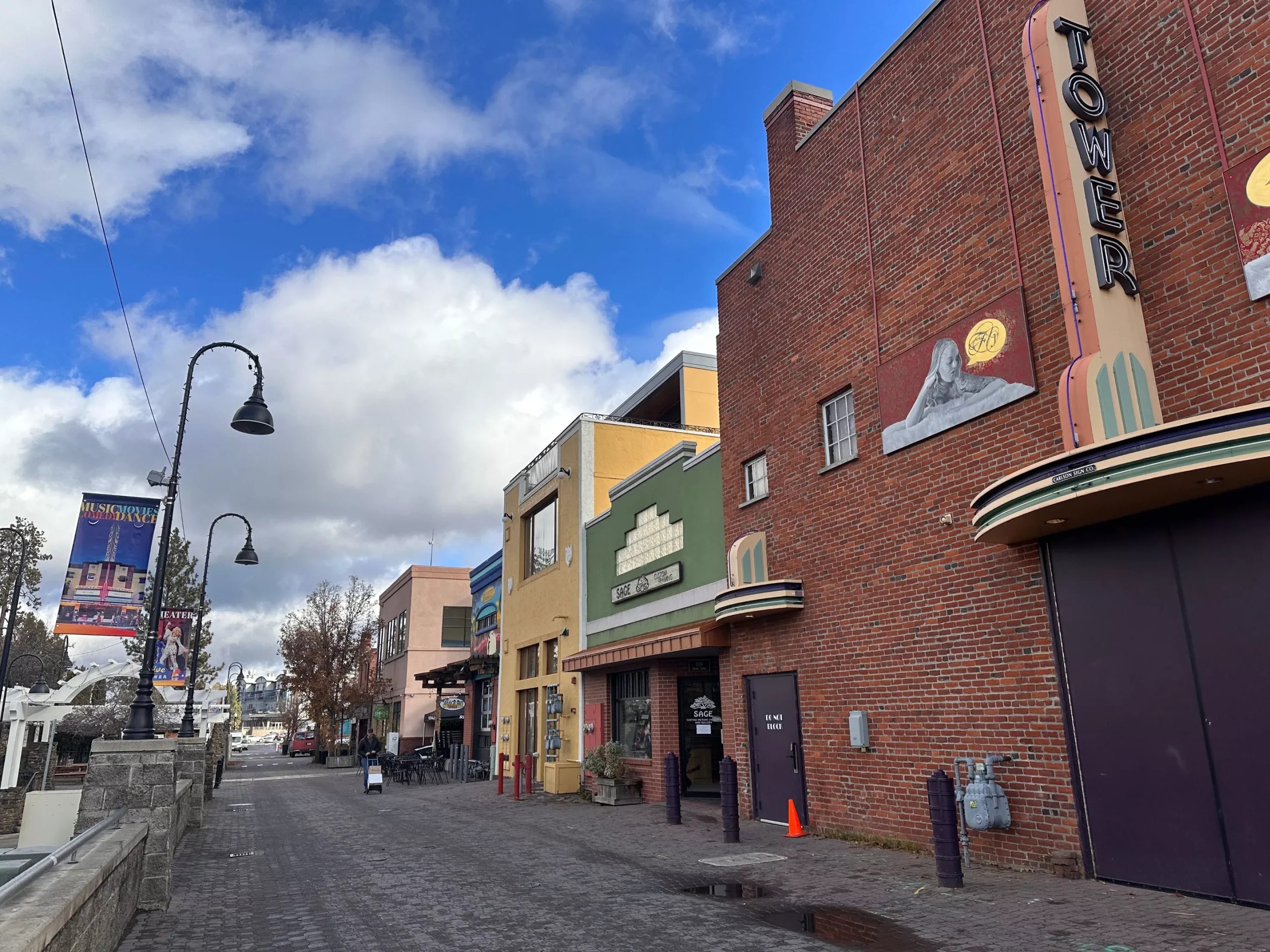
When the DBBA heard the pitch for low-car districts in September, which included a concept for a plaza street on Minnesota Avenue, concerns mounted about parking and access to businesses.
“Parking is such a commodity in downtown. Saying this to downtown, it immediately triggered everyone,” Mikesell told the Source Weekly. “It’s not that we’re anti-bikes and anti-people streets. Downtown just isn’t built for it.”
The DBBA, concerned about the elimination of more parking, has taken a formal stance against “people streets.” According to Mikesell, there has already been an increase in community members avoiding the downtown area due to its lack of parking. With a plaza or low-car district on streets such as Oregon or Minnesota Avenues, DBBA leaders fear the problems will worsen.
“We’re dependent on parking, because it’s a car society here,” Rick Johns, a downtown business owner, told the Source Weekly.
In 2021, the DBBA, under different leadership, proposed a plaza street on Minnesota Avenue, but eventually lost support from other downtown business owners.
Aside from parking, the DBBA worries that access to storefronts on the targeted streets will become inconvenient, especially in inclement weather or for elderly or disabled customers, making businesses suffer.
Since the initial concepts received negative feedback from downtown businesses, the City of Bend has planned a “reset” meeting with the DBBA on Dec. 9 to have a deeper discussion on some of the ideas highlighted in the case study.
A Larger Vision
While the DBBA hopes to work with the City, downtown stakeholders maintain that they should have been involved before the City even began developing its case study. Concurrently with its case study, the City formed a steering committee to discuss things like the design, location and key principles. The committee encompasses people from historically underserved groups and equity-based organizations, said Platt. However, none are members of the DBBA, according to Mikesell.
Corie Harlan, the Cities and Towns Program director with Central Oregon LandWatch, is a member of the committee. With “people streets,” Harlan said, the City would have the ability to connect key destinations and improve east-west connectivity, via the new non-car bridge planned across Highway 97 and the railroad tracks. Envisioning these low-car districts as a viable connection with the planned Hawthorne Bridge has prompted even more momentum and interest.
“Hawthorne Bridge can’t be a bridge to nowhere, so we have to figure out what that looks like. I think this is the start of that conversation,” said Muchna with Envision Bend.
According to Platt, a downtown street isn’t the only option for these districts, signaling some community support for connecting people to and from the Hawthorne crossing on the Bend Central District side – something to likely be explored in the case study.
The City’s case study will continue till May 2025. Policies for these districts will be adopted after the City updates its Transportation System Plan, expected in 2027.
“I think, like everything in Bend, a lot of people will hate it just because its change. For places like the Central District, where they’re really planning a complete redevelopment of that whole area, it’s a great opportunity to put some of these pedestrian-friendly design features into that district to make it more walkable, more attractive for people,” said David Brandt, executive director of Housing Works, in attendance at the Open House.
This article appears in Source Weekly November 21, 2024.
MAKE LOCAL JOURNALISM HAPPEN


Downtown is perfect location for pedestrian only site given the limited street parking and the backups that occur when someone is waiting to grab a spot. Walking around shops, business, etc is much more conducive to making purchases that driving around. At the very least, consider pedestrian only on weekends.
“members of the Downtown Bend Business Association say they have felt left out of the conversation, noting a lack of communication and involvement in the process”. Welcome to the club, often the city seems more comfortable dictating terms rather than considering and incorporating differing views.
The greater SLC area has a Trax system which has parking areas and hubs in outer areas where people could hop the train and head into downtowns without all of the car congestion. Commuters also use it regularly. Like it or not Centeral Oregon is growing rapidly and the City Fathers both in Redmond and Bend need to step up their game when it comes to road infrastruture to accommodate the growing population needs. Congestion is already a problem due to lack of foresight on the part of city planners. This could be a win win for all if they were to consider a similar plan for Centeral Oregon.
One thing we all know for sure…….the City of Bend if FULL of clueless people as to how to build/grow/manage a city. They will screw up whatever they decide THEY want to do. We see it over and over and over. If it isn’t ignorance……….you can bet corruption will be involved.
Consider an analogy-
“We can’t make the area more bike/pedestrian friendly, because it’s car-dependent right now” is similar to your physician telling you:
“I can’t make you well, because you’re ill right now”
Maybe a pure contra opportunity could be developed: make car-free, promenade “streets” in the BCD and leave the west side of the Hawthorne bridge as is. Over a period of years, see which area prospers more. Leave speculation on the sidelines with a true test case in the immediate area.
The other thing that strikes me is this question: how many parking spaces are there on Minnesota between Wall and Lava? How does that compare to spaces in the adjacent parking structure? Or in the entire downtown area between Franklin and Greenwood, Brooks (and its parking area) and Lava/Irving?
I’d be surprised if there’s even 3 dozen spaces on Minnesota between Wall and Lava. There’s more than twice that number in the small lot off Brooks. Would losing half the Brooks lot be an epic loss?
We mostly stopped going downtown years ago because of the car-caused gridlock. When we do we typically park on Wall north of Greenwood to avoid trying to navigate the downtown area. Even once on foot we feel the presence of way too many cars driven by folks who would rather vie for a space in the limited area than walking a few blocks to minimize congestion and enhance everyone’s experience.
I’ve heard these arguments for too many years now. Let’s get on with minimizing the presence of cars in the small downtown area and maximizing a better quality experience for the business patrons, both locals and out of area visitors.