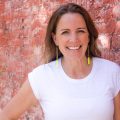
Chris Beck has served three terms in the Oregon Legislative Assembly, worked for the U.S. Department of Agriculture during the Obama Administration, and most recently has been an elections observer in countries that were once part of the Soviet bloc. Following all that, he’s running for Congress on the Democratic and Independent party tickets against incumbent Republican, Rep. Cliff Bentz.
The Source spoke with Beck about his platform. The below interview has been lightly edited for clarity.

The Source: Tell us a little bit about yourself and your platform.
Chris Beck: I’m an Oregon native, and I grew up in Portland, went to school in Portland, but my parents were very involved in the community, very civically engaged people, and I think that rubbed off on me a lot. Both parents, my mother and father, were both involved with various conservation efforts. But I think the stuff for my youth, which really resonated, were all of our activities east of the mountains. My dad grew up in Redmond in the Depression. His dad was the ag instructor at Redmond High School in the ‘30s and ‘40s, and so we a lot of our time was spent east of the mountains. I grew up going hunting every year in in the Ochocos and east of Prineville and down to Lake County, in the fall to the Warner Valley, which most people have never been to. We spent every summertime vacation at Fall River, south of Bend, south of Sunriver — we were going to Central Oregon before there was Sunriver. I mean, I remember traveling, driving around the dirt roads when Sunriver was just the old army lodge and a few houses, some bike paths, but it was mostly just empty, and then go looking for rocks and arrowheads, and that’s the sort of stuff we did. I started going all over the Wallowas in my teens, and then and then I ended up having well, I would just say that those experiences with my family really rooted me in the landscape, the geography, the towns.
Every one of these towns used to have a mill. Most of them don’t anymore. So I’ve just had a whole life of watching these rural communities change, and some have recovered. Most have not, and so that’s just all part of the ether of my life experience. I ended up having a public service career after college and worked in the legislature on natural resources. And became a fan of Oregon’s land use system. I still am, and I, you know, an abiding interest in that whole set of public policies. And then worked at USDA for the Obama administration, working on rural economic development policy, I did that for six years back in D.C. So that further rooted me to the challenges that rural communities in rural America face.
tS: What are the top three issues facing Congressional District 2?
CB: I don’t think we can overstate how problematic this war has become and is going to become. We were cutting inflation after the pandemic. It was being reduced, interest rates were stabilizing, and then the war came in and made everything worse again. And we now have rising cost of living, rising inflation, rising interest rates, and none of this needed to be. So I think ending the war really is this existential need or existential dynamic that’s affecting all of our lives.
As a part of that, just affordability in general. I mean, everyone talks about it. It’s true. Things after the pandemic became more unaffordable, and many things like housing, especially for young people, were unaffordable before the pandemic. And everything has gotten worse in terms of affordability. And part addressing affordability has to involve inflation, which means temporarily higher interest rates to control inflation, but then you need to balance interest rates so that they don’t make things even more unaffordable. It’s complicated economic policy, but we have not gotten it right. And between the tariffs which Trump imposed at the beginning of the administration and the war, we’re doing everything wrong to address affordability issues. So, the relationship between affordability and the war, I think, can’t be overstated. Throw in the cuts from H.R. 1 to Medicaid and food nutrition. Again, going taking a broken — taking a fragile and marginal healthcare system and making it worse is just going to create even more affordability issues with many people in this district. Many people, something like 40% of the district is on Medicaid.
So if some of those people lose Medicaid, that one is going to make their lives more of a challenge. But it’s also going to obviously, as we’ve learned, it’s affecting hospitals everywhere because they rely on Medicaid patients to operate; it’s a marginal business these days. They’re anticipating loss of Medicaid patients, which is causing some hospitals to lose services. In Ashland’s case, Asante is basically closing, and so all these things that Trump is doing are going in the complete wrong direction for how to address affordability issues and long-term economic stability. And of course, Cliff Benz has been a complicit partner in everything Trump does, and it’s baffling that he is unable to be critical about a few of the Trump policies and actions, but he seems incapable of expressing any independent thought from what the current administration is doing.
tS: So if I had to sum up your top three issues, it sounds like you said the war, health care and affordability. OK, got it.
You said you served three terms in the legislature. Talk a little bit about your time there and how it informed your approach to serving in Congress.
CB: Yeah, well, it was a long time ago. I was a younger person. This was before the Tea Party came along, but I felt I was serving in the Oregon Legislature when the country was becoming more and more divided and more partisan, and so I feel like I had a front-row seat to the devolution of the Republican Party, because most the Republicans in the Oregon Legislature at that time they weren’t interested in governance, they weren’t terribly civic minded, they were simply about tearing down the institutions. This had grown out of Reaganism and then ultimately Gingrichism, and so I had a front-row seat to the decline of the Republican Party, and as it was exhibited in Salem. They were passing bills they knew the governor wouldn’t sign, so he had a record number of vetoes when I was there. Instead of collaborating and cooperating and compromising on any number of other big issues, they just were interested in seeing the system collapse. So that kind of gave me a front-row seat, front-row view into what was happening within the Republican Party, and I think that’s just gotten worse. And we’ve now ended up to where Trump has taken advantage of all those dynamics and made things even worse.
And the Project 2025 vision is just kind of a — or not vision — yeah, it’s their vision, their ideology, the 2025 ideology of eviscerating the government is coming to fruition. I believe, as a result of all this, solutions still need to come from some sort of collaboration across our differences, whether it’s Social Security or a health care system, or even ending the war in Iran, I don’t think it can be done by one party. We have to find people in both parties who are willing to compromise, willing to address these mega institutional challenges, and find a way forward, even when we disagree on a whole bunch of things. We’ve got to figure out how to approach some of these problems in a in a more bipartisan effort. Approach them in a more bipartisan way. That doesn’t mean you need 50% of each party to go along with things, but I think there are enough people in the Republican Party who do want to fix Social Security, who do want a Medicare and Medicaid system which works. Maybe it’s even national health insurance system like the Oregon Health Plan, but those folks are going to need to be convinced to come along, and I think that since I do think Trump, the Republicans are going to lose the majority in Congress, and I think they may lose the presidency in 2028, I’m hoping that enough Republicans who remain will want to work with the Democrats to solve these issues rather than just following the Trump Kool Aid.
tS: You mentioned adequate health coverage in the district. What’s your approach to helping people get that adequate health coverage if they are finding themselves disenrolled or otherwise not covered?
CB: Well, aspirationally, I think we need to repeal H.R. 1 out of out of the block, and that would be kind of a band-aid — and a temporary band-aid — to what was already a fragile health care system, but that would return the Obamacare, the ACA subsidies, and it would put off these cuts to Medicaid. But that doesn’t solve the long-term solution. If the Democrats come in and repeal H.R.1, and when they do that, they should put on the table a national healthcare plan, a vision. I think Oregon’s health care plan, which really focuses on preventive care and downstream impacts, is a really good model, and I think we should put that kind of model on and how it might be implemented on a national basis, we should put that on the table. Ron Wyden is going to be chairman of the Senate Finance Committee, and he knows healthcare backwards and forwards, could probably write a really good proposal on the back of a napkin, and he ought to put that into legislation. John Kitzhaber should be involved. He knows health care better than probably any former elected official in the country, and the Oregon Health Plan has been fairly successful. And I think we that would be the vision for moving forward and trying to work with the Trump administration to sign it. I know this sounds weird, but I think we’d have a better chance of getting Trump to sign a national health care plan than most any other Republican because I don’t think Trump really cares. I think he’s just so transactional. Yeah, if he could make it in his interest to create a durable long-term healthcare system, I think he’d be way more likely to pass it than any of the cronies in the Heritage Foundation in the 2025 regime. All those people: Paul Ryan, Vance, Tom Cotton, all these people-they hate Medicaid, Medicare, and Social Security. Trump doesn’t care.
tS: You already acknowledged that just repealing the “One Big Beautiful Bill” would hopefully fix some things or at least bring us back to another baseline. But what other areas of reduced federal funding are you most concerned about right now for people in CD2?
CB: Well, I think Social Security — everyone is aware that Social Security is going to start going bankrupt and losing benefits in what, half a dozen years, and I think we need to get a hold of it now. Even Bentz has said there are bipartisan conversations about that. I’m glad to hear that. I hope that’s true, but I think we need to address that sooner than later. Obviously, the other cuts in H.R. 1 to food assistance are affecting a lot of families and a lot of children. That stuff has downstream impacts — if families who are vulnerable no longer have adequate nutrition and food.
tS: What’s your approach to wildfire funding, prevention, mitigation?
CB: Again, another example of where the Trump administration is doing everything wrong. The DOGE cuts took away staff throughout the whole federal government, including all the land management agencies. When you lose seasoned staff and a lot of young staff from these agencies, you lose the capacity to address wildfire, right? You lose some of the firefighting resources, and maybe more importantly, the long-term resources to analyze what we need to do to manage the forest. How we need to adapt to a changing climate. I think there’s some consensus that we need to be actively addressing fuel reduction in the forests. How we do that’s really important, and we need seasoned, non-ideological people, non-political appointees, in positions helping analyze what the best approach to fuel reduction is, and how are we going to implement it? A lot of that work is not something the private sector is going to do. It doesn’t. There’s no money in it. There’s no profit in it. So it’s going to take Uncle Sam underwriting a long-term, sustained approach to fuel reduction in our in our forests. So to try to reduce wildfire, Bentz keeps talking about we just need to graze more. There’s probably some responsible grazing regimes that we need to be talking about and implementing in the forest, but not just some reflexive, ‘We just need more grazing totally,’ and without any sort of study and analysis about what responsible grazing looks like in the forest and in the in the open the grazing lands, the sage lands as well. Juniper. I mean, we need to we need aggressive efforts to reduce juniper trees. To remove juniper is not profitable. That’s something I think Uncle Sam needs to do — needs to be hiring people to do for years and years. Juniper take up water from the ground, and if there’s a lot of juniper on the landscape, it it’s explosive, and we so we need to reduce it as much as possible. But there needs to be a plan. It’s not just one guy sitting in an office figuring all this out. You need science. I’ll repeat that. You need science, and you need people in agencies and in universities who are thinking about this, not cutting staff and resources to our forestry programs at Oregon State and other and other land grant institutions that study these kinds of things. So again, they’re doing everything in the wrong direction on wildfire.
While Bend’s not really rural anymore, Bend’s pretty striking housing problems affect Madras and Crook County and Prineville, as well. Someone working in Bend shouldn’t have to drive from Prineville every day.
tS: I think a lot of times people put the political parties in two camps. If you’re a Democrat, you’re anti-logging. If you’re a Republican, you’re pro-logging. What do you say about that?
CB: I’m not in either of those camps. I want to see mills. I would love to see, I don’t know, a dozen towns have small mills again with smaller-diameter logs. The big trees are gone, and it may take time to where we have merchantable timber in a sustained way in many of these communities. But we should be aspiring to be growing trees and harvesting them in a sustainable way. That should be a goal throughout the district. It will take time. It will take some, you know, years, maybe a couple decades of intensive government investment to make our forests healthy again, so that we can be harvesting sustainably. So I’m I’m not against sustainable harvest, but I think we have to have an adult conversation around the table. We’ll disagree. All the interests need to be involved. The big trees need to be avoided, and we need to establish confidence that that harvesting can continue can resume in forests where there are already roads. We don’t need to build more roads into the forest. We have plenty. Probably need to reduce some roads, and we probably need to harvest differently. And technology allows the mills to be more efficient. So you know, I’m not against logging in the right way, and I don’t like logging when it’s done accessibly and without thought. My father was an attorney, had a number of clients who were timber companies. The timber industry underwrote my education, my college education. When you go to the Oregon Capitol, I think it’s the carpet in the either the Senate or the House has tree motif. It’s a reminder that was a part of how Oregon came. But we did overharvest for much of pre-war and post-war Oregon, and the big trees are gone. They’re not coming back. And but we need to get together and establish trust with each other that we want to grow trees again. And it’s going to be harder because it’s drier and and milder winters, and the fires are going to keep coming. We’re going to lose a lot of timber to fires, so we need kind of all get together and quit fighting about this stuff. But also, the fights that have nothing to do with natural resources often prevent us from having good discussions about natural resource issues. We get mired in in social and cultural issues, which divide us, so then we seem to be unable to have good conversations about water and land management.
tS: How can Congress support the construction of more affordable housing in the district, and is this a priority for you?
CB: It is a priority, and we just need to build more. When Reagan came in, they started cutting HUD, and we just stopped. We didn’t stop, but we significantly reduced the amount of affordable housing that was being underwritten by the federal government. And when you stop doing that, or you reduce the volume, well, suddenly it just becomes housing by the private sector. The private sector doesn’t do affordable housing unless they’re given tax credits and incentives, which is what has been reduced. So that puts more pressure on the housing system overall. So there has been, without that volume of subsidized affordable housing going into the system, there’s just less housing, which puts more pressure on the housing market, and then throw in a whole bunch of other dynamics that have to do with mobility and the economy shifting. So we’re now at a point, and we have been for a while, that housing there’s just not enough affordable housing anywhere, even in in poorer communities, so it’s not just an urban problem; it’s a rural problem. We just need to build more. I worked at USDA for the Rural Housing Service. They were actually my employer, and even though I wasn’t too involved with housing policy, I was doing broader policy. But USDA is the major underwriter of affordable housing in rural America. I would like to see that agency, which is old and clunky and needs to be reformed — I would like to work with Republicans and Democrats in Congress, hopefully on the House Agriculture Committee, to really look at how we might adjust USDA’s policies to infuse resources that would result in more housing in in rural communities, and that might start with programs that favor first-time homebuyers, young people who want to live in a community to be able to, with lower interest rates, long-term terms or long-term loans. And lower interest rates might be a way to underwrite some new housing stock for young young families and individuals, for that matter, it might be done through some rental assistance vouchers.
While Bend’s not really rural anymore, Bend’s pretty striking housing problems affect Madras and Crook County and Prineville, as well. Someone working in Bend shouldn’t have to drive from Prineville every day.
tS: We talked a little bit about economic development. Just wanted to hear any thoughts you had about economic development for the region and what you can do in Congress to support that.
CB: I mean, it’s a that’s a big one. I think sometimes I think broadly, sometimes I’m thinking specific. There’s so many federal programs that do help, and I think the federal government has a role in through other Small Business Administration or USDA’s Rural Business Administration program. It’s this balance between what government can do to help get businesses started and promote entrepreneurialism, but also not stifling private sector activity. We want more small businesses. They don’t always need government assistance, but they might want might benefit by investments in in roads and water systems and or affordable housing that makes it easier for an entrepreneur to find a market if people can actually afford to live in that town. It’s really identifying, where can the government, where can Congress inject resources to promote economic development and entrepreneurialism in the private sector. One area that’s been really puzzling to me is what used to be called earmarks. They now call them, congressionally congressional directed spending projects. Those are like often very small projects, which are usually requested by the community or their city or the county, and those are often kind of like direct projects which will jumpstart either an existing business or help an existing business get over a hump, but usually with long-term economic benefits in mind. Bentz hasn’t — in six years he hasn’t asked for a single one of these projects from Congress.
tS: What separates from you from Cliff Benz, and why, if you may conjecture, do you think people keep voting him in?
CB: I think we just have very different dispositions. I like people. I like talking to people. I like arguing with people. I like the opportunity to convince people of my views, and I like letting them convince me of their views, because I’m open to changing my views on some things, and I like to foster an environment where people are open to changing their views as well. That’s what life is like. That’s what human relationships are like. And I, I think that’s why, you know, that’s what these town halls ought to be. They ought to be forums for this kind of civil discourse where we work. We understand our disagreements. We try to understand, you know, a little in a more granular way where those disagreements really are, and then where they actually aren’t as big disagreements as we think. And so that’s why it’s so puzzling to me. He doesn’t want to engage with the public, and yet the more I’ve come to understand it. I think he’s just uncomfortable having discussion or dissent, argument. I think it’s awkward for him some for some reason. Whereas, I kind of enjoy it. When I went to the Pendleton Roundup parade, the opening parade of the Pendleton Roundup, I walked on the street and shook hands with everybody, mostly Republicans and non-affiliated voters, I had a great time. I got lots of smiles. We cut. We made some jokes, and you know, I met a lot of people. Cliff, week later, rode in the parade for the closing parade. He rode in a cart with some horses drawn, and he waved to everybody. I think that that’s sort of a clear example of how different we are. Why people keep voting for him could be, you know, they just didn’t feel there was an alternative. I’d like to think I’m a pretty reasonable candidate. I’m a decent person. I’m pretty straightforward — very straightforward — and I’m hoping people will see this as an opportunity to have someone who really wants to work for them and wants to show up and work across our agreements, disagreements. I think it’s really important to just acknowledge we don’t all agree on everything. That’s fine, but don’t we want to have a good healthcare system? Don’t we want our kids to be able to go to college and not have debt? Don’t we want a stable Social Security system? No one likes this war. Let’s figure out how to get out of it. Work with our allies to take us out of this hole that Trump and Hegseth and Israel have put us into. I think overall people want to work together on those issues, and but if you’re not willing to engage with people, have town halls, phone calls with random constituents, which I get out of the blue. You know, Cliff just not available. He doesn’t seem interested in talking to the breadth of society, and he’s got one one lord, and that is Trump. And you know, it’s so puzzling when you look at his voters’ pamphlet statement. You’re going to use up valuable 325-words space to have endorsements from your Republican colleagues across the country instead of your constituents. It’s so that kind of stuff reveals how you’re thinking.
MAKE LOCAL JOURNALISM HAPPEN